Retail Roof Leaks At Storefront Parapets
Inside The Building
Water shows up above the front windows and display areas after storms.
On The Roof
Cracked coping joints and open base flashing along the front parapet.

As a Highland commercial roofing contractor, we replace shopping-strip and storefront roofs one tenant space at a time, so the shops below keep their doors open.
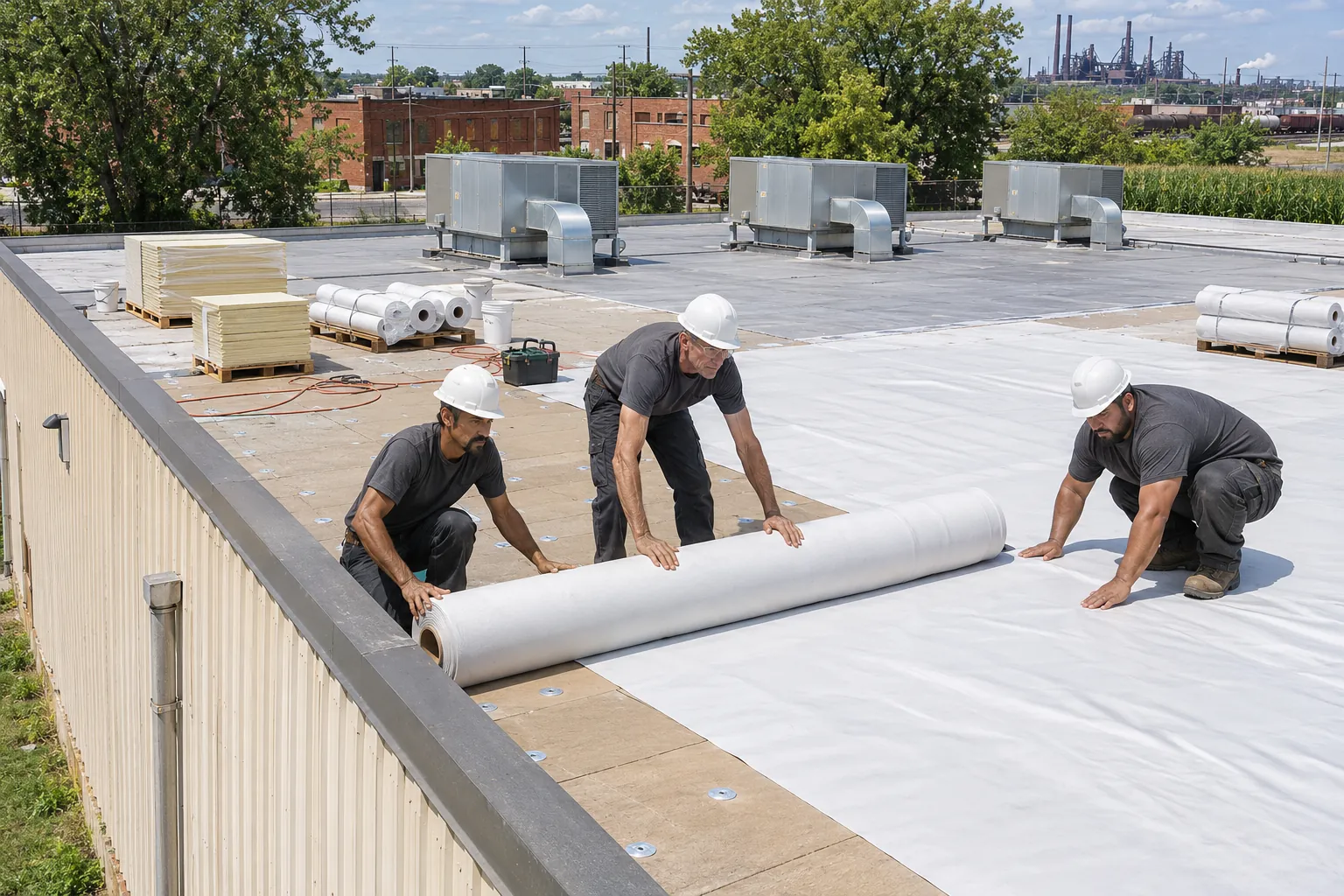
Highland commercial roofing on a shopping strip means one roof shared by several businesses.
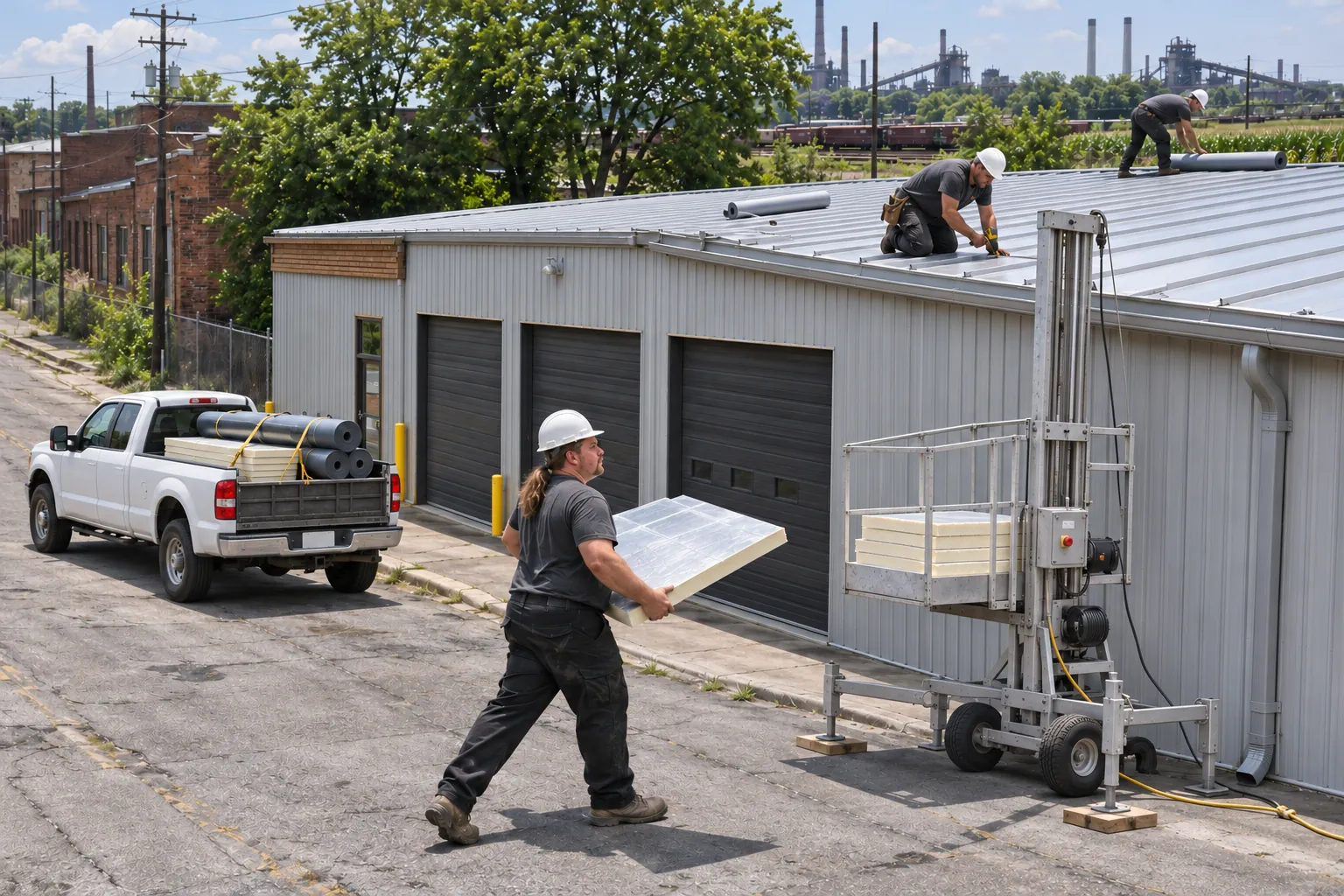
The membrane runs across every tenant space, but each tenant has its own hours, deliveries, and rooftop units. The job is phased storefront by storefront, starting over the spaces that leak worst.
Each tenant gets notice of their dates, and deliveries at the back doors are kept clear by staging material at the strip ends. Rooftop units for each space are reflashed during that space’s phase.
Retail strip roofs leak where tenants meet: parapets, demising walls, and shared drains.
Water shows up above the front windows and display areas after storms.
Cracked coping joints and open base flashing along the front parapet.
Two neighboring shops report ceiling drips after the same heavy rain.
A clogged shared drain flooding the roof area over both spaces.
Stains form near the sales floor diffusers in one space only.
Curb flashing worn out on units added by past tenants.
Repairs in one space seem to move the leak next door.
Wet insulation spreading under the whole strip from years of patches.
Water lines show on the back of the parapet wall after storms.
Low roof areas along the parapet with no scupper to let water out.
Phasing by storefront keeps sales going while the roof above changes.
Only the space under the open section sees work each day, so neighboring shops keep selling and the strip never goes dark during the job.
New coping and base flashing along the storefront parapet stop the leaks over windows and displays that customers notice first.
Shared drains are cleared, reset, and backed by overflow scuppers, so one clog stops flooding two tenants at once.
Each tenant rooftop unit gets new curb flashing as its section is replaced, ending the drips above sales floors.
These four systems cover the retail and warehouse roofs we replace in Highland.
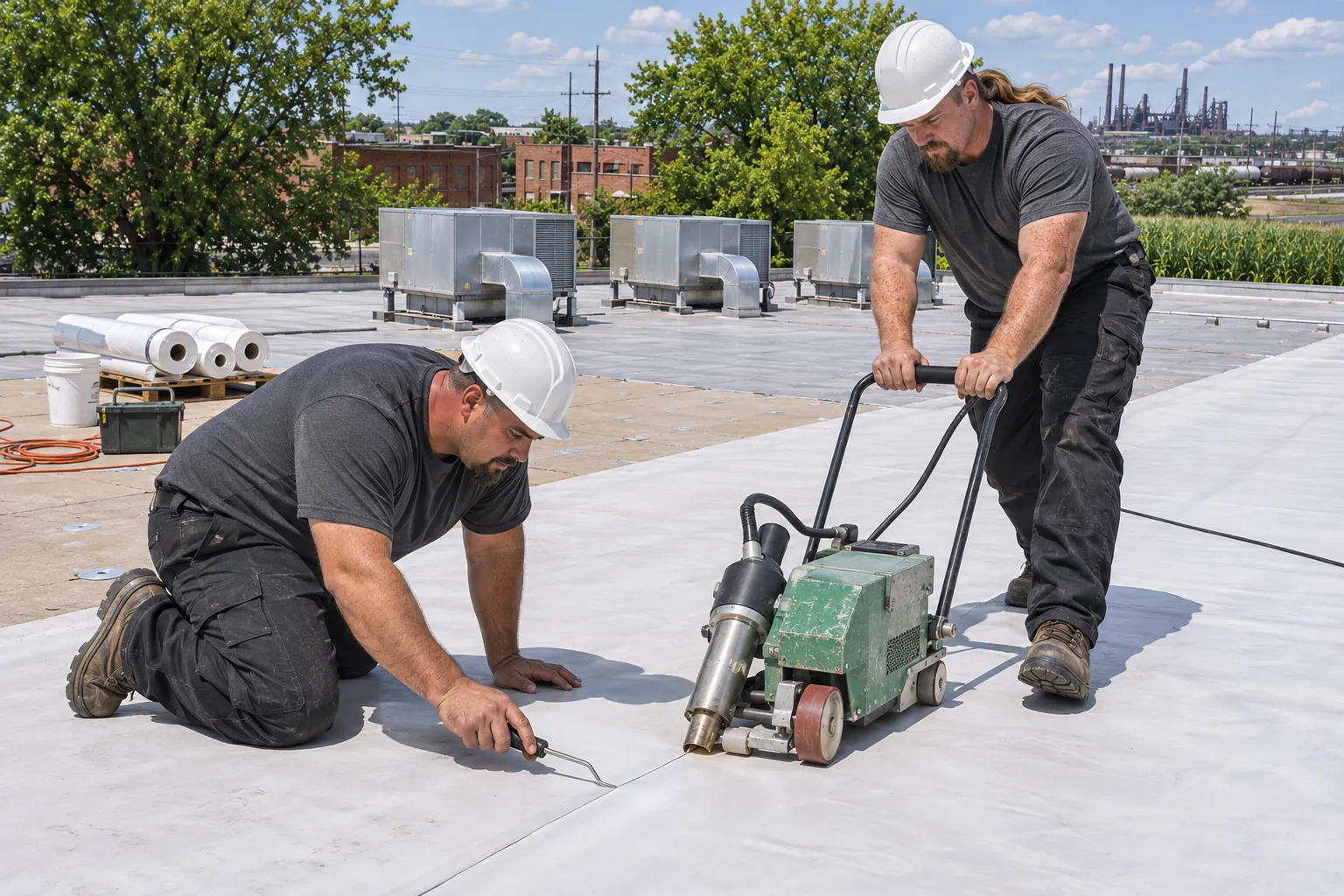
White membrane that welds across demising walls into one sheet over the whole strip, keeping sales floors cooler in summer.
TPO Roofing details →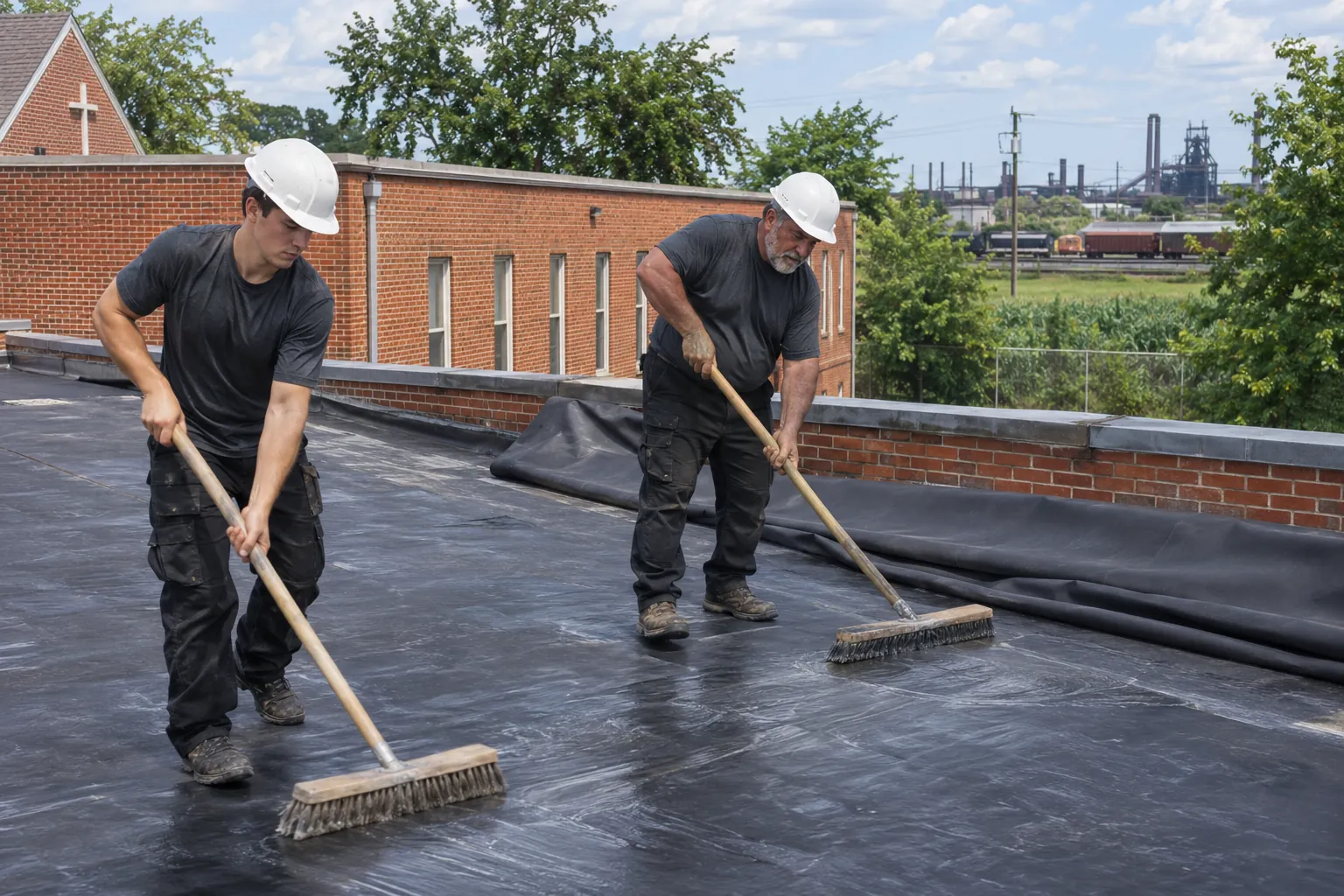
Rubber sheet for older strips already roofed in EPDM where tenants want simple patching later.
EPDM Roofing details →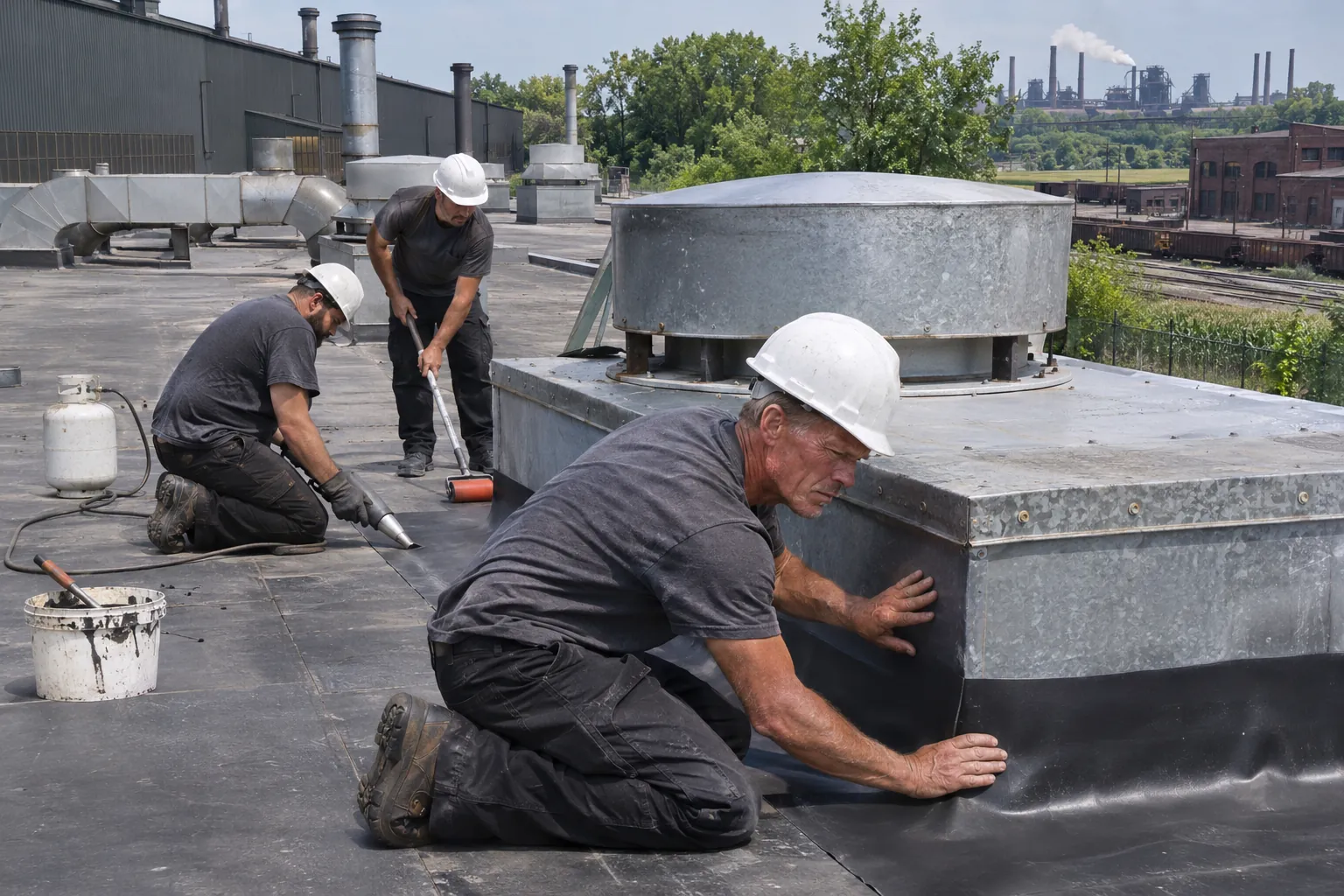
Heavier membrane for Highland warehouses behind the retail strips, with pads to busy rooftop units.
Industrial Roofing details →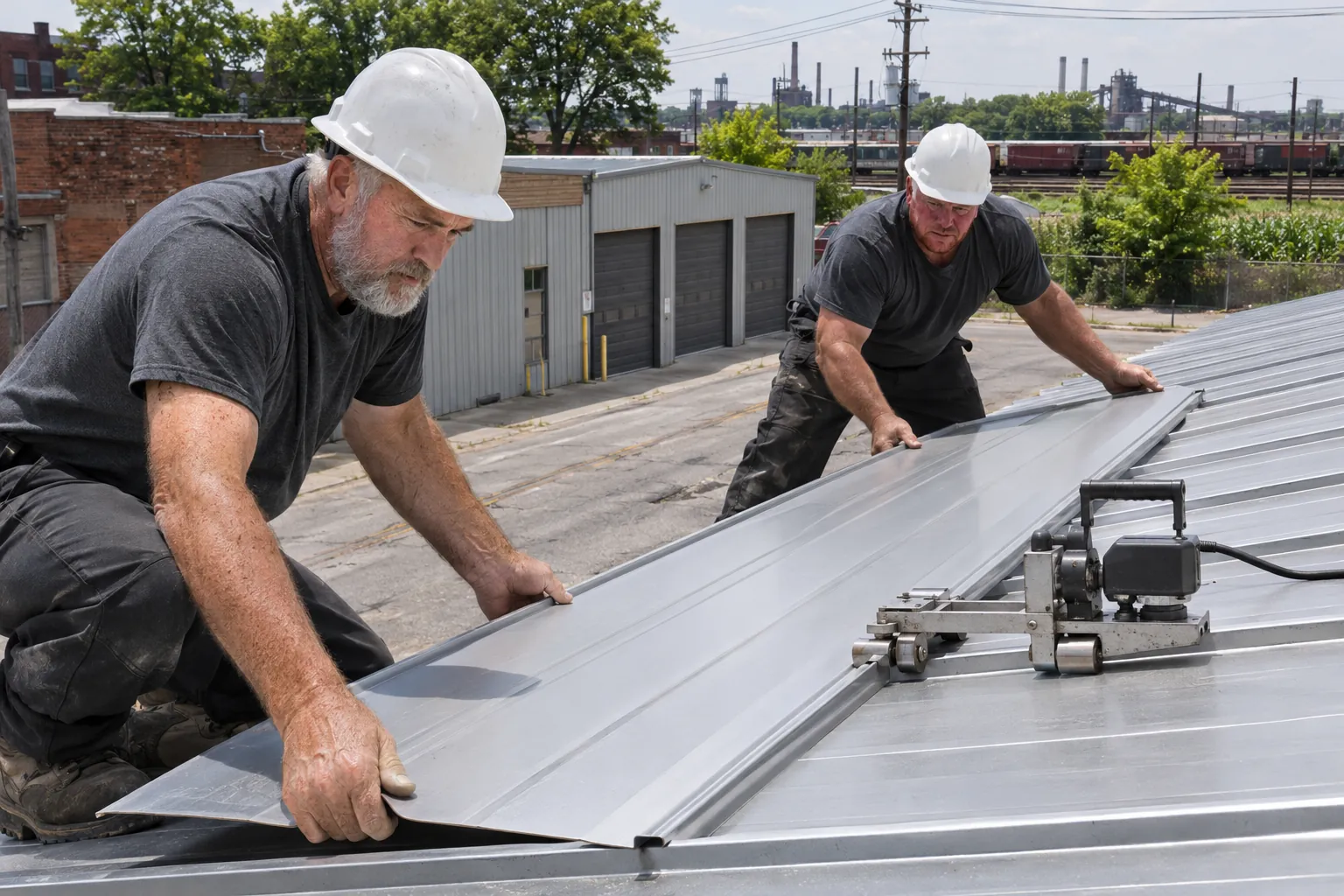
Standing-seam panels on storefront mansards, canopies, and pitched entry roofs facing the parking lot.
Commercial Metal Roofing details →Call with the strip address. We will check the shared drains and parapets first.
Every Highland strip job follows these four stages so tenants know their dates.
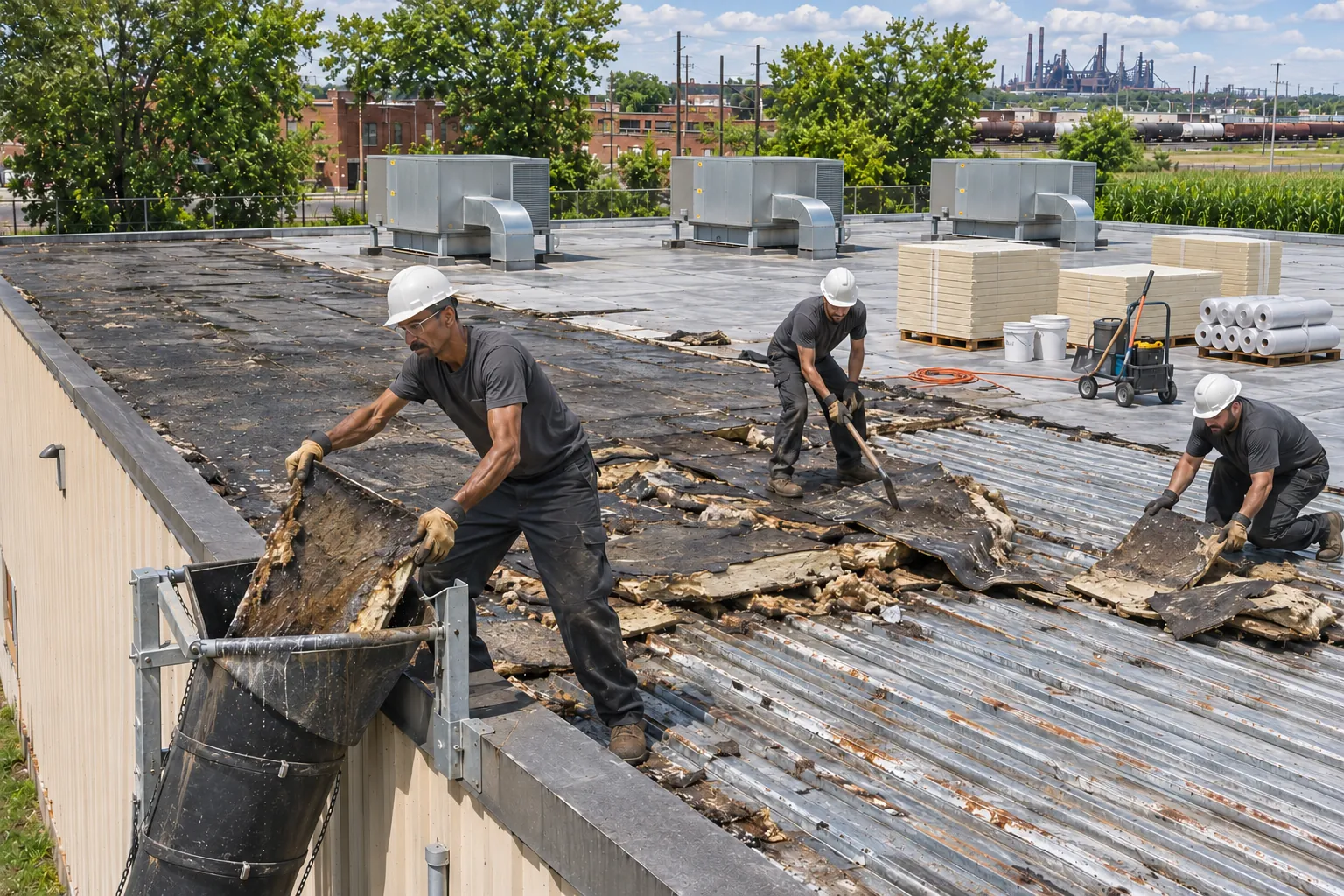
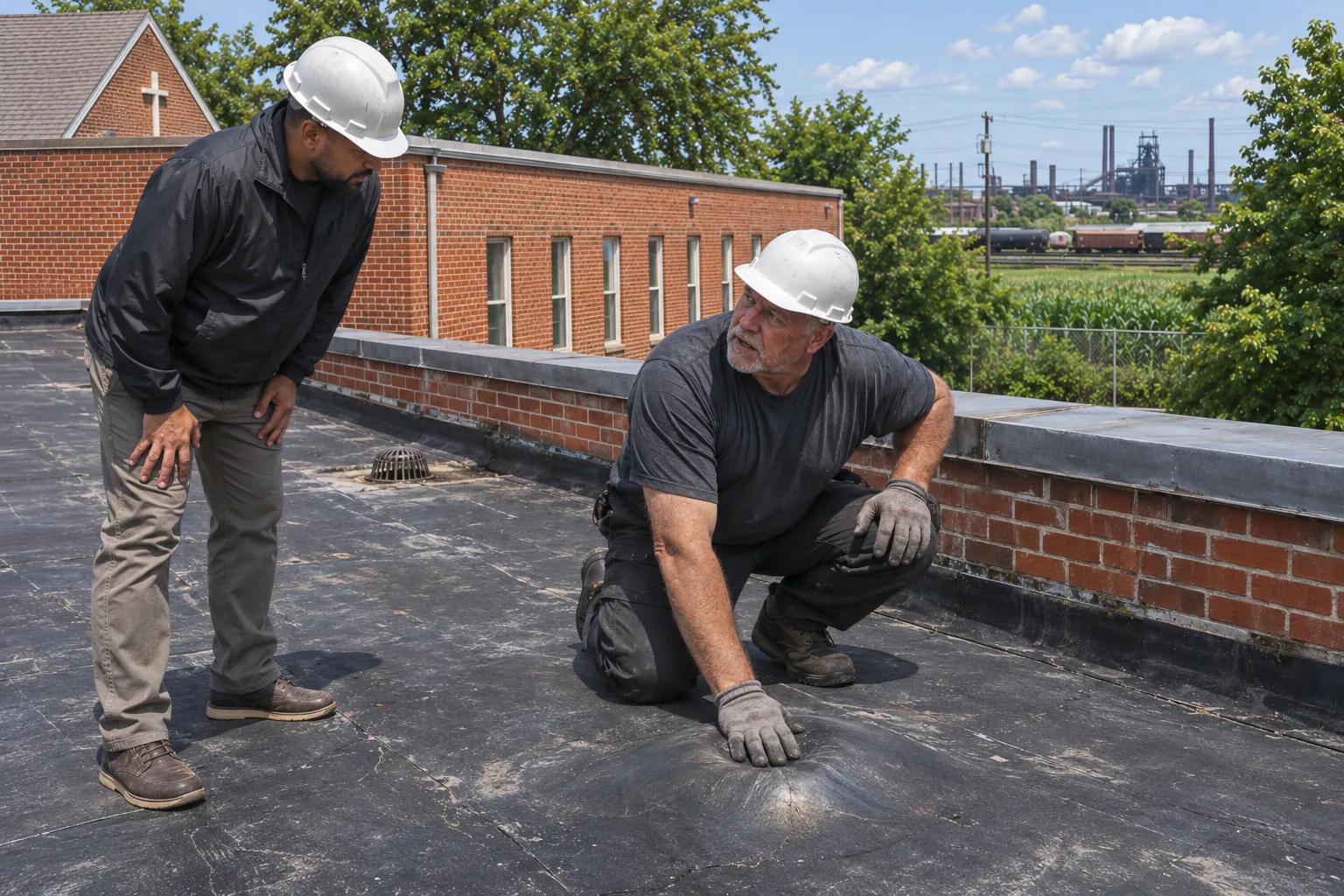
The roof is walked over each storefront, cores are cut, and leaks are matched to the tenants who reported them.
Phases follow leak severity and tenant schedules, and each tenant gets their dates in writing.
Each phase is torn off, insulated, and covered, then tied in to the old roof until the next phase opens.
Coping, base flashing, and drains are finished across the strip, and the roof is walked with the owner.
We cover these neighboring towns too. Somewhere else? Call us or send us a message.
Home base: plants, rail warehouses, church halls, and offices.
Large warehouse and industrial roofs replaced section by section.
Plant roofs crowded with stacks, fans, and curbs.
Office and medical roofs over people working all day.
Pitched metal shops next to flat office roofs.
Yes. Roof replacement and new systems go on Highland buildings from shopping strips to warehouses. The existing roof is inspected and checked for wet insulation, then TPO, EPDM, or metal is chosen by slope, drainage, and use. Work is scheduled to keep tenants open.
The leases decide it. Many strip leases put the roof on the owner, while some pass costs to tenants by square footage. The scope can price each tenant space separately to help with that split.
Each strip scope breaks the roof into phases by storefront, each with its own square footage, units, and price, so owners can bill or budget by space.
Material lifts happen at the strip ends or the back lot, away from customer entrances. Barriers mark any area below the roof edge while that section is open.
Storefront canopies and mansards belong in the same scope, usually in standing-seam metal, and are flashed into the main roof at the parapet.
A typical storefront phase runs a few working days for tear-off, insulation, and membrane, plus the time to flash its rooftop units. Weather days push the phase rather than leaving the space half done.
Where a demising wall rises through the roof, its cap and flashing are rebuilt with the phase on either side, closing a joint that often lets water into two tenant spaces at once.
Most tenants stay open through their phase. Loud tear-off is timed for early hours, the work area above the space is closed in each evening, and anything dropping dust over a sales floor is covered first.
Send the strip address and the tenants with leaks, and we will set up the roof visit.