Soft Membrane Near Exhaust Fans
Inside The Building
Drips land on machinery directly under the roof fans after rain.
On The Roof
Membrane softened by grease and residue, with curb flashing pulling loose.

As an East Chicago commercial roofing contractor, we replace roofs on industrial plants and the buildings around them, choosing membranes that stand up to exhaust and heat.
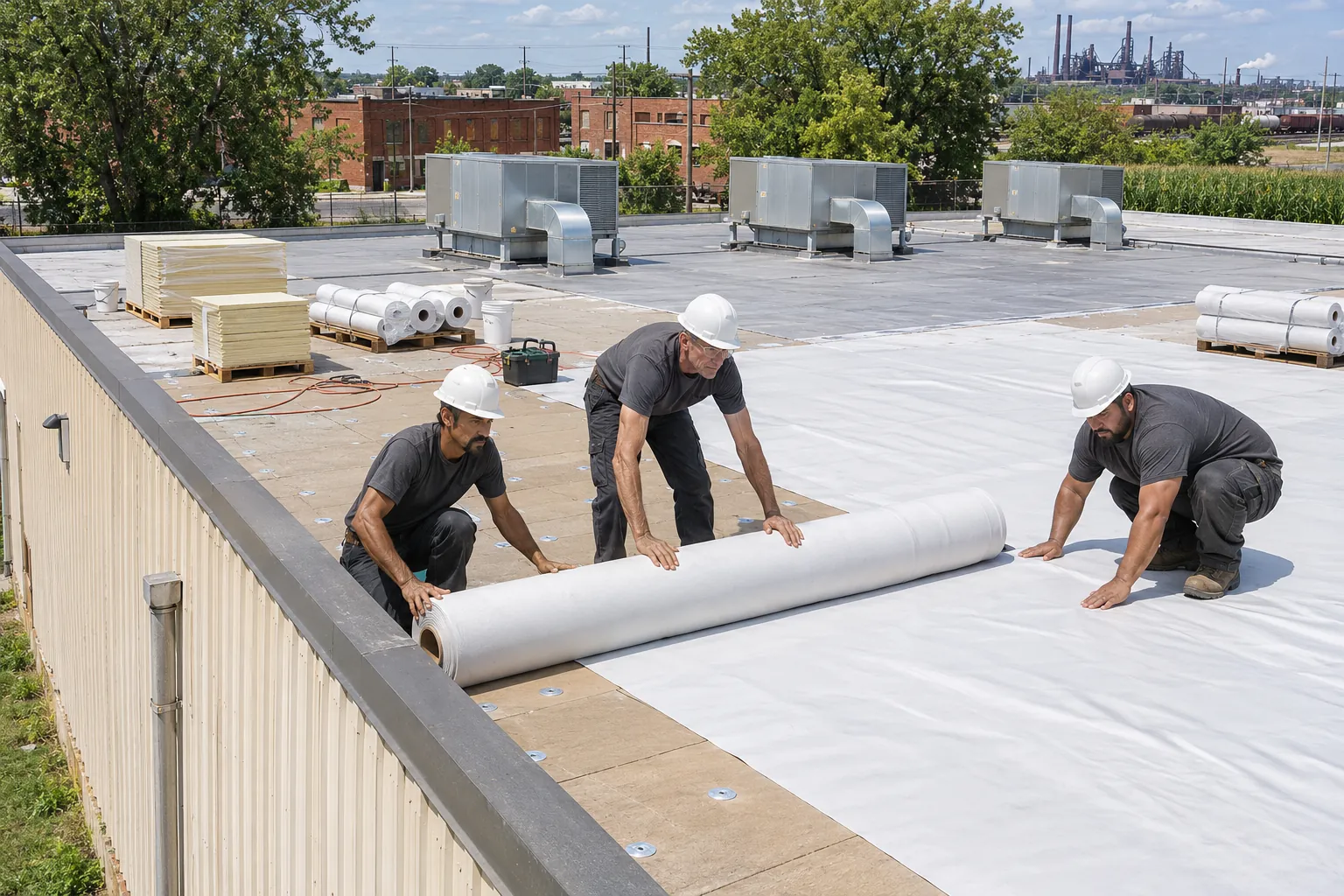
East Chicago commercial roofing jobs start with what leaves the plant through its roof fans.
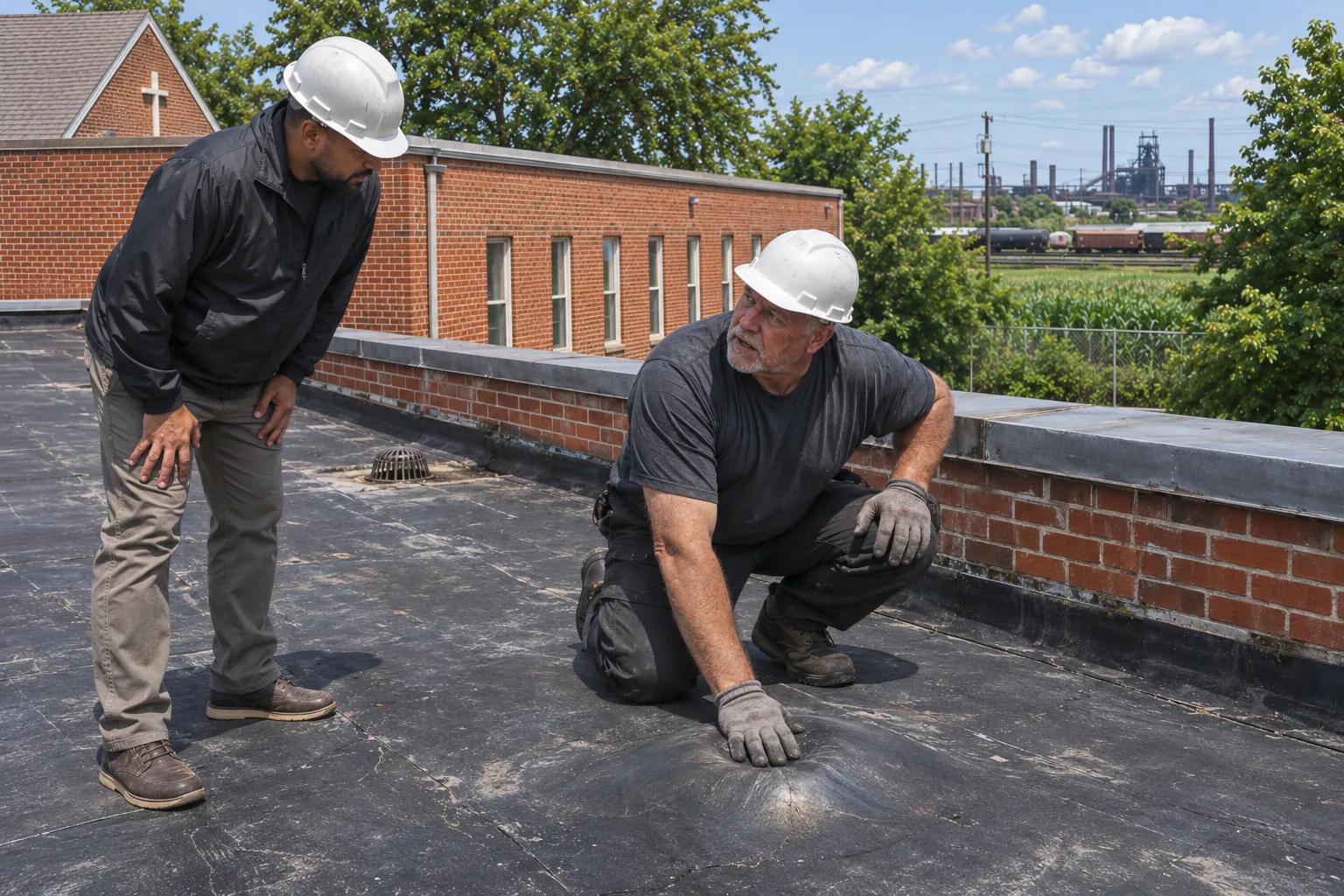
Oils, grease, and chemical residue settle on the membrane around exhaust fans and stacks. Some membranes soften or swell under that exposure, so the residue is identified first and the sheet is chosen to resist it.
Around the worst fans, a sacrificial layer or metal panel area takes the residue, and drains are set so washdown water leaves the roof instead of pooling near the curbs.
Plant roofs fail first where equipment pierces them. These patterns lead most East Chicago calls.
Drips land on machinery directly under the roof fans after rain.
Membrane softened by grease and residue, with curb flashing pulling loose.
Rings of rust form on the deck around each stack inside the plant.
Heat-cracked boots and flashing that split as stacks expand and cool.
Small leaks line up along the path maintenance crews walk.
Membrane scuffed through between the hatch and the units.
Leaks keep returning in new spots after each repair.
Insulation wet across several bays and seams failing roof-wide.
Water stands around fan bases inside the plant after cleaning days.
Low spots by the curbs holding rinse water and residue against the flashing.
The gains on a plant roof show up at the fans, the stacks, and the floor below them.
Membrane picked for the residue leaving your fans keeps its strength around the curbs, where an unmatched sheet softens and splits within a few seasons.
Boots and collars rated for the heat at each stack move with the pipe as it warms and cools, so the deck below stops rusting in rings.
Walkway pads from the hatch to each unit keep boots and dropped tools off the field membrane during every maintenance round.
Drains and crickets placed around fan clusters carry washdown water and rain off the roof instead of pooling against curbs.
Each system below gets matched to the exhaust and equipment on the roof.
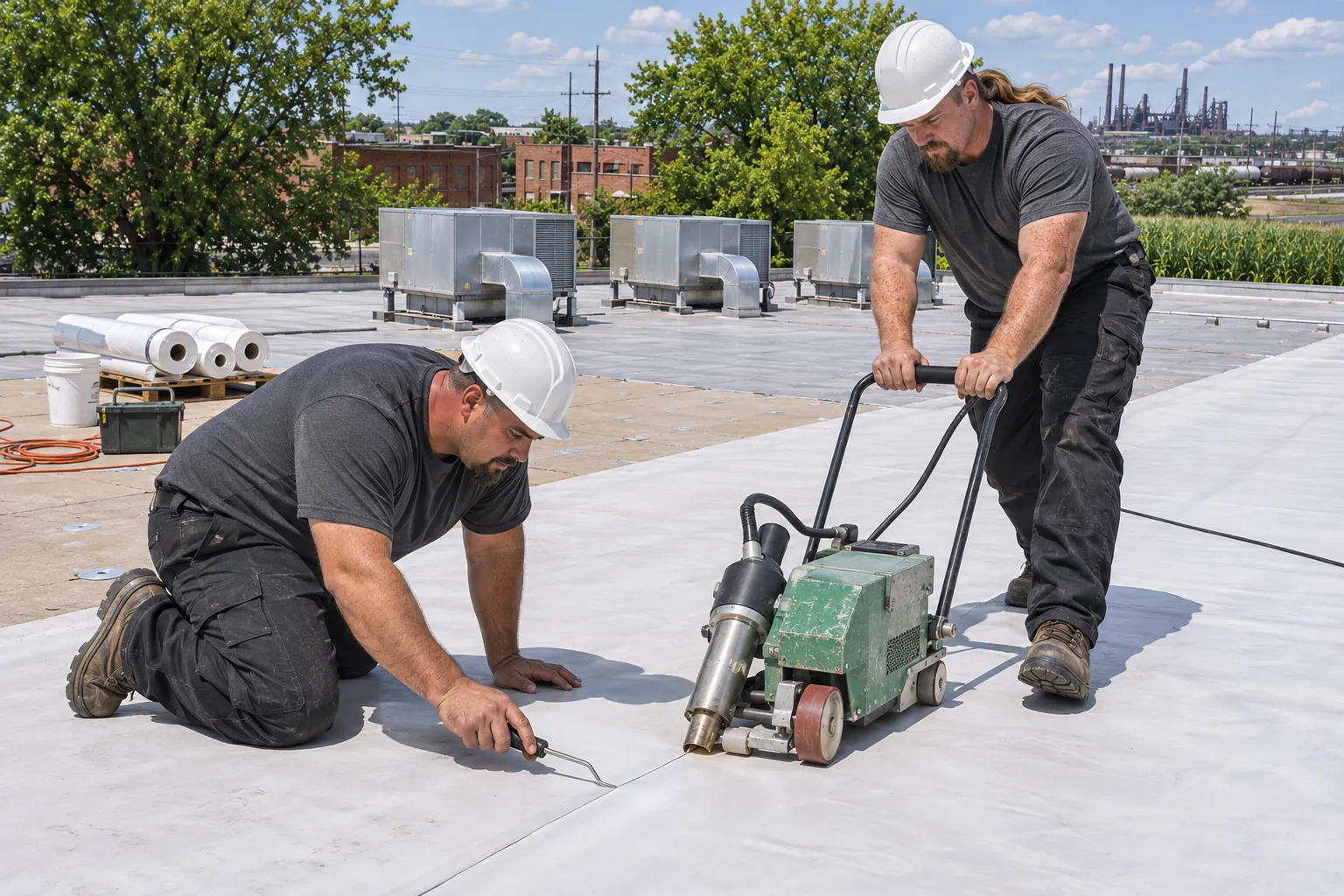
Reflective membrane for plant roofs with heavy cooling loads, checked against the residue leaving the fans before it goes down.
TPO Roofing details →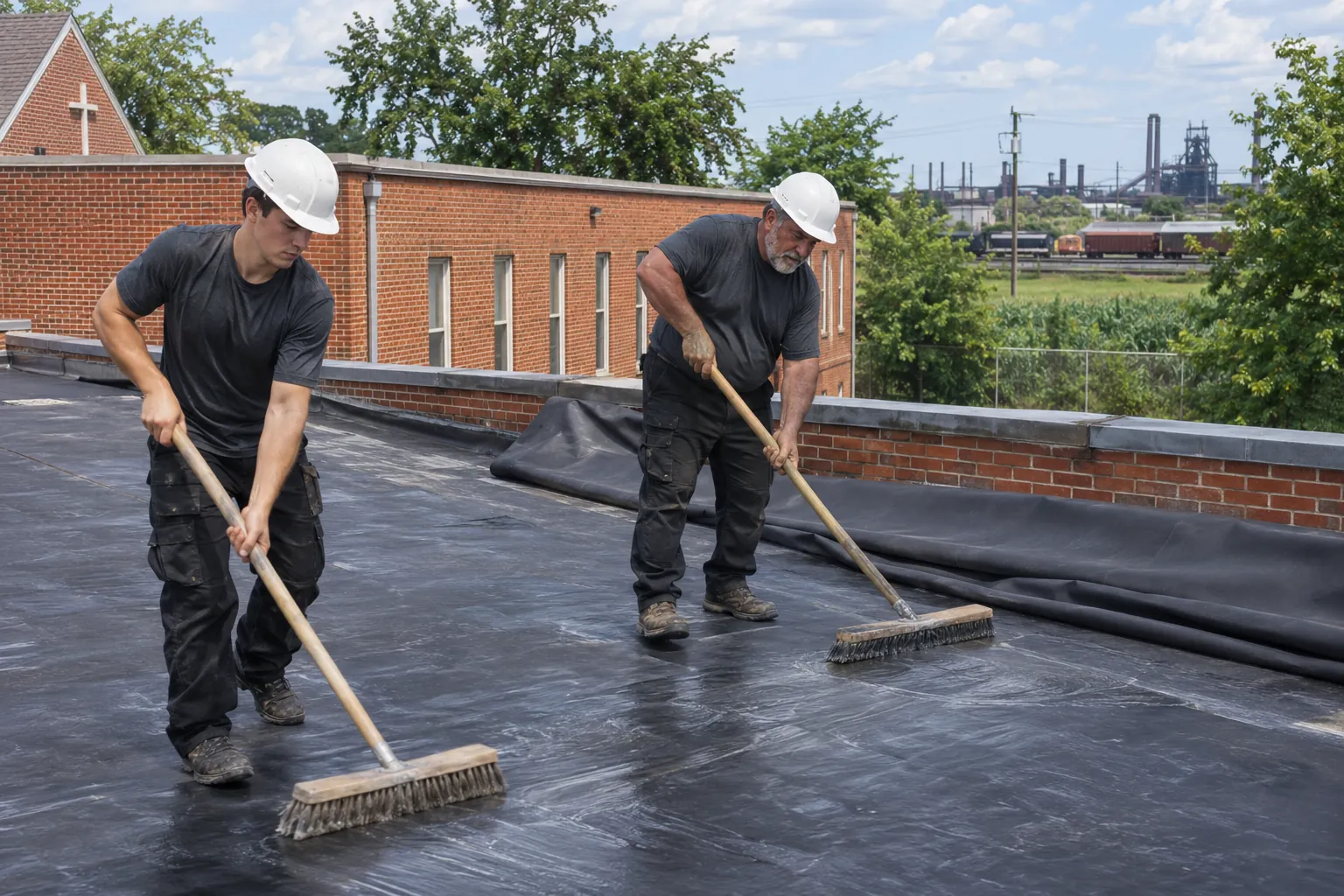
Rubber sheet for low-slope plant sections with simple layouts and little oil exposure around the equipment.
EPDM Roofing details →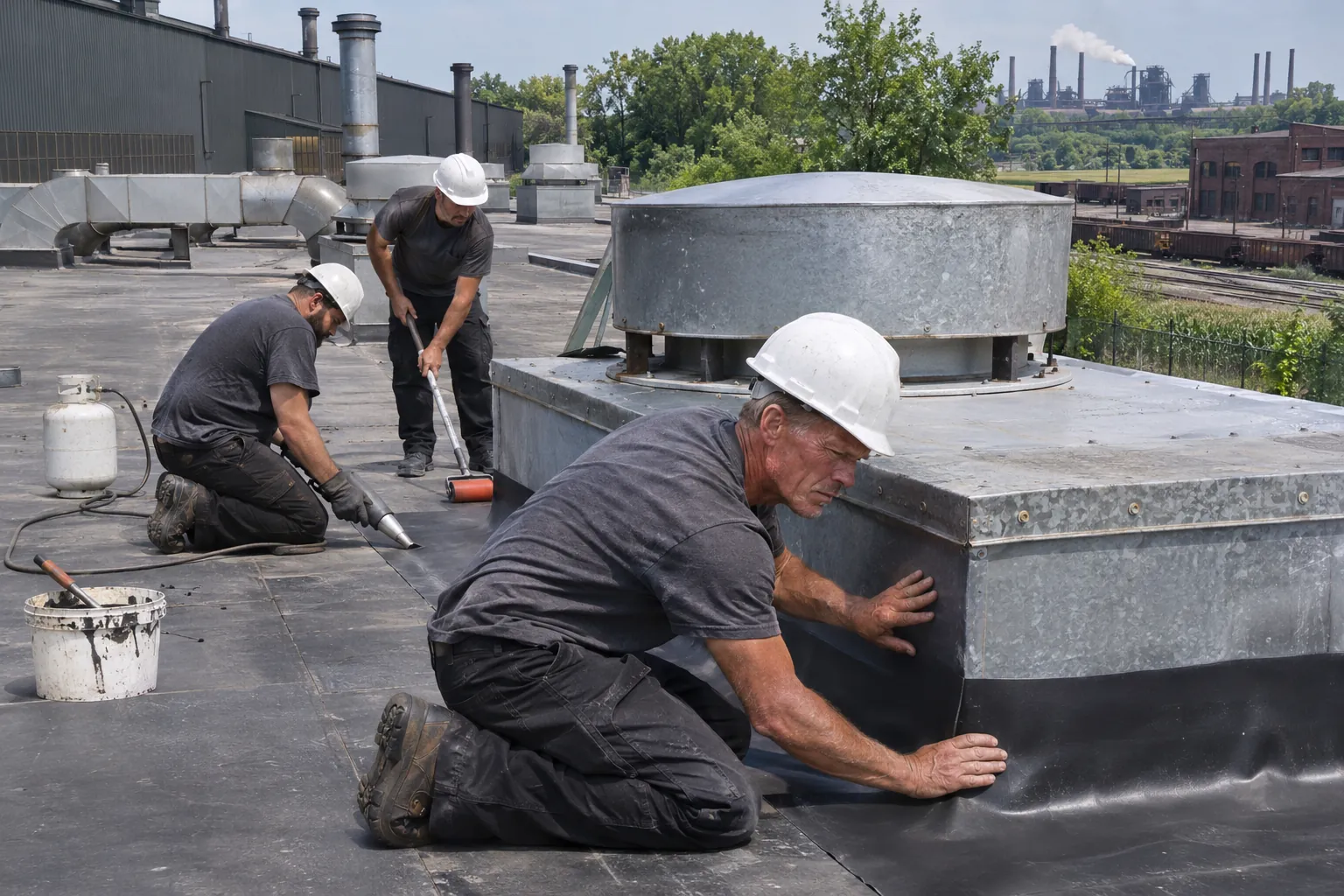
Thick membranes, cover boards, and reinforced curb flashing for East Chicago roofs crowded with fans, stacks, and ductwork.
Industrial Roofing details →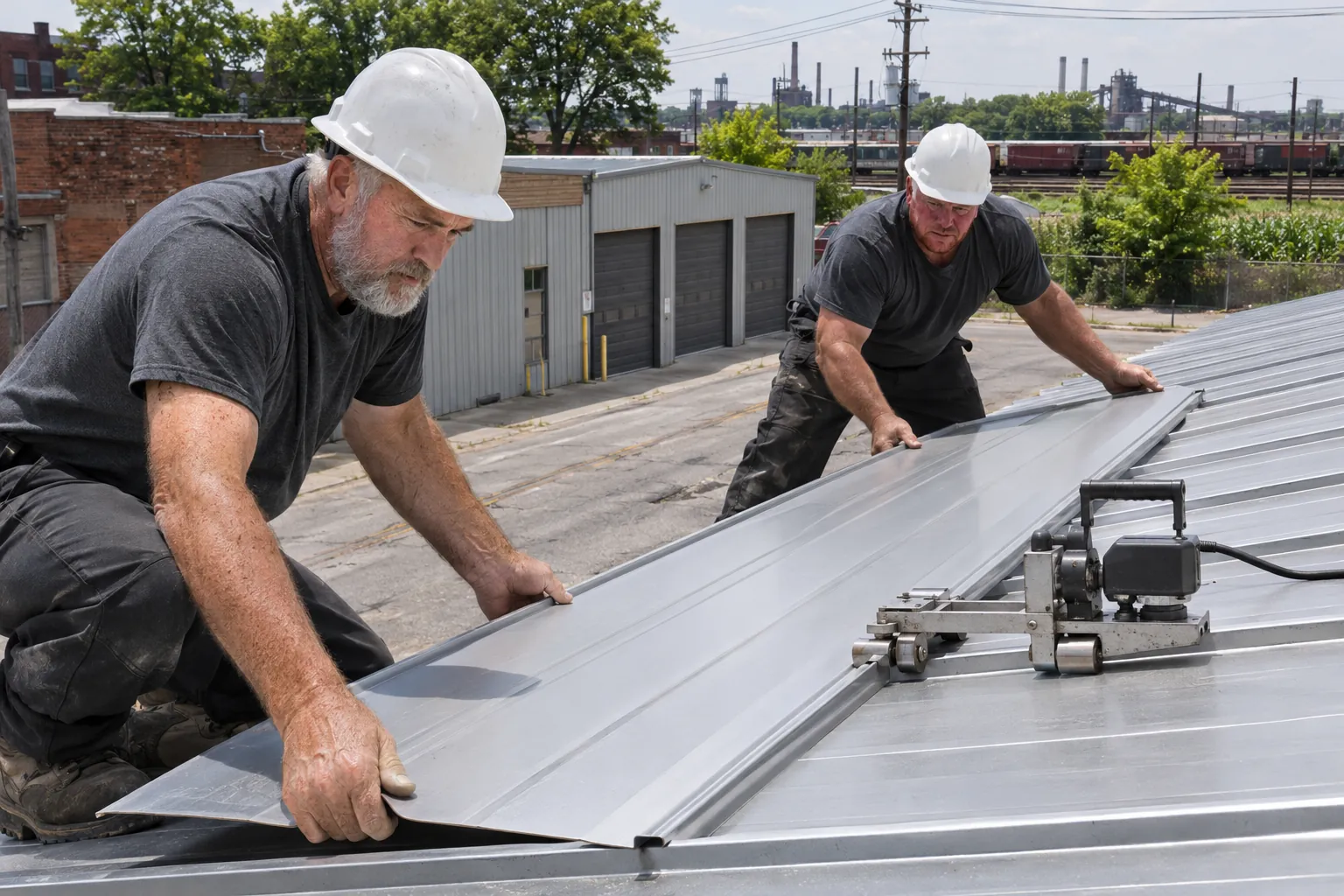
Coated steel panels on pitched process and storage buildings where residue would soften a membrane.
Commercial Metal Roofing details →Call with the building and the bay. The curbs above it get checked first.
Roof work on a plant is booked around shifts, shutdowns, and the trades on site.
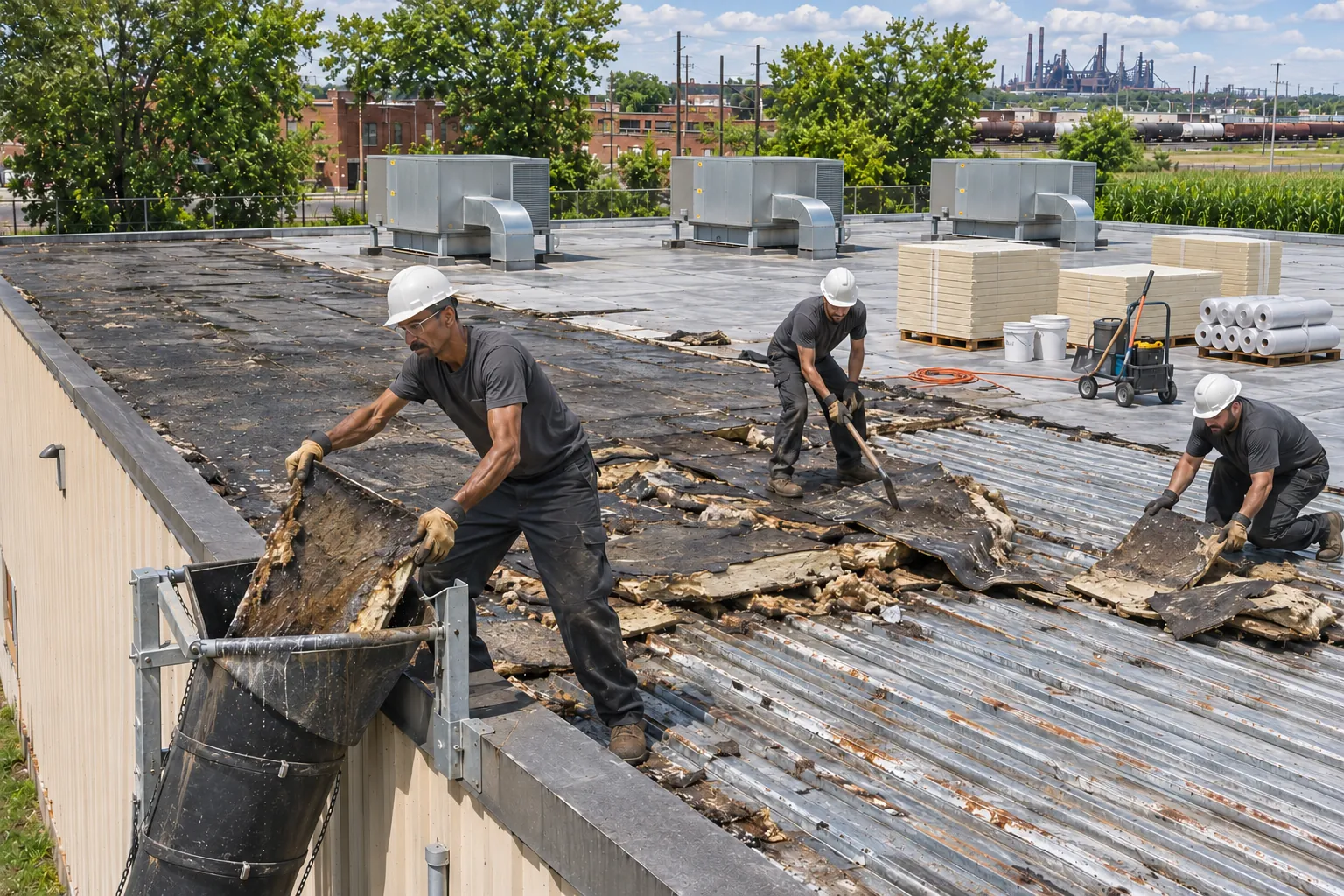
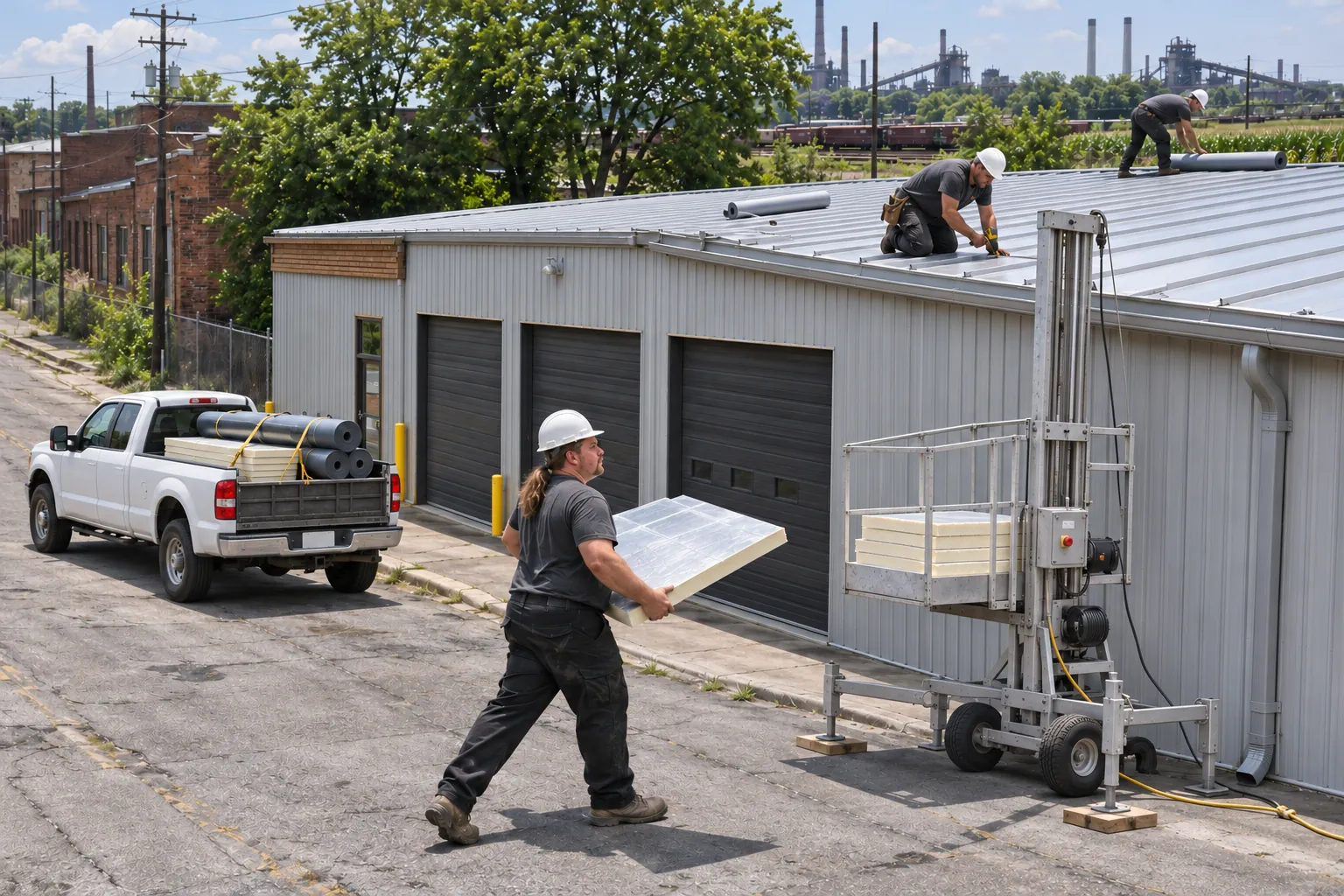
Every fan, stack, and curb is logged with the residue around it, and cores show what sits under each bay.
The membrane and flashing products are chosen against that residue before the scope and price are written.
Bays are torn off and closed in around shift changes or shutdowns, with unit lifts booked through your mechanical crew.
Curbs and stacks get new flashing and caps, pads go down, and the roof is walked with your maintenance lead.
These towns are in our area too. Building elsewhere? Call us or send us a message.
Office and medical roofs over people working all day.
Yes. Plant and commercial roofs in East Chicago get TPO, EPDM, or metal to suit the building. Heavy equipment means planning flashing and walkways, and exhaust residue narrows the membrane choice. Tear-off is staged so each section closes up before the crew leaves.
It depends on what the fans release. Some membranes hold up to animal fats and oils far better than others, so the residue is identified on the roof visit and the membrane maker confirms its resistance before the scope is written.
A hot stack gets a heat-rated collar or counterflashed sleeve that keeps membrane away from the hot surface, with clearances set by the stack maker. Ordinary rubber boots crack quickly at those temperatures.
Yes. Tear-off zones are scheduled around shift changes and planned shutdowns, and fumes from the roofing products are kept clear of air intakes by timing and product choice.
Plant roofs see more traffic and residue than most, so a spring and fall walk, plus a check after major storms, catches curb and seam problems while they are still small repairs.
An unmatched membrane exposed to oils and grease softens, swells, and splits near the source. Picking a resistant sheet, adding walkway pads around fans, and rinsing residue during routine checks keep the field intact far longer.
After an upset, heat, soot, or chemical release can damage membrane and flashing near the source. The roof is walked before the bay restarts, damaged areas are photographed for the insurer, and temporary repairs close any openings.
Send the plant address and the bays that leak, and we will plan the roof visit around your shifts.