Ready
Fits EPDM Now
Open fields with simple edges and a few units.
- Penetrations
- A handful of pipes and curbs
- Insulation
- Dry in core cuts
- Drainage
- Water reaches drains
- Old Roof
- One layer or bare deck
- Next Step
- Install or recover
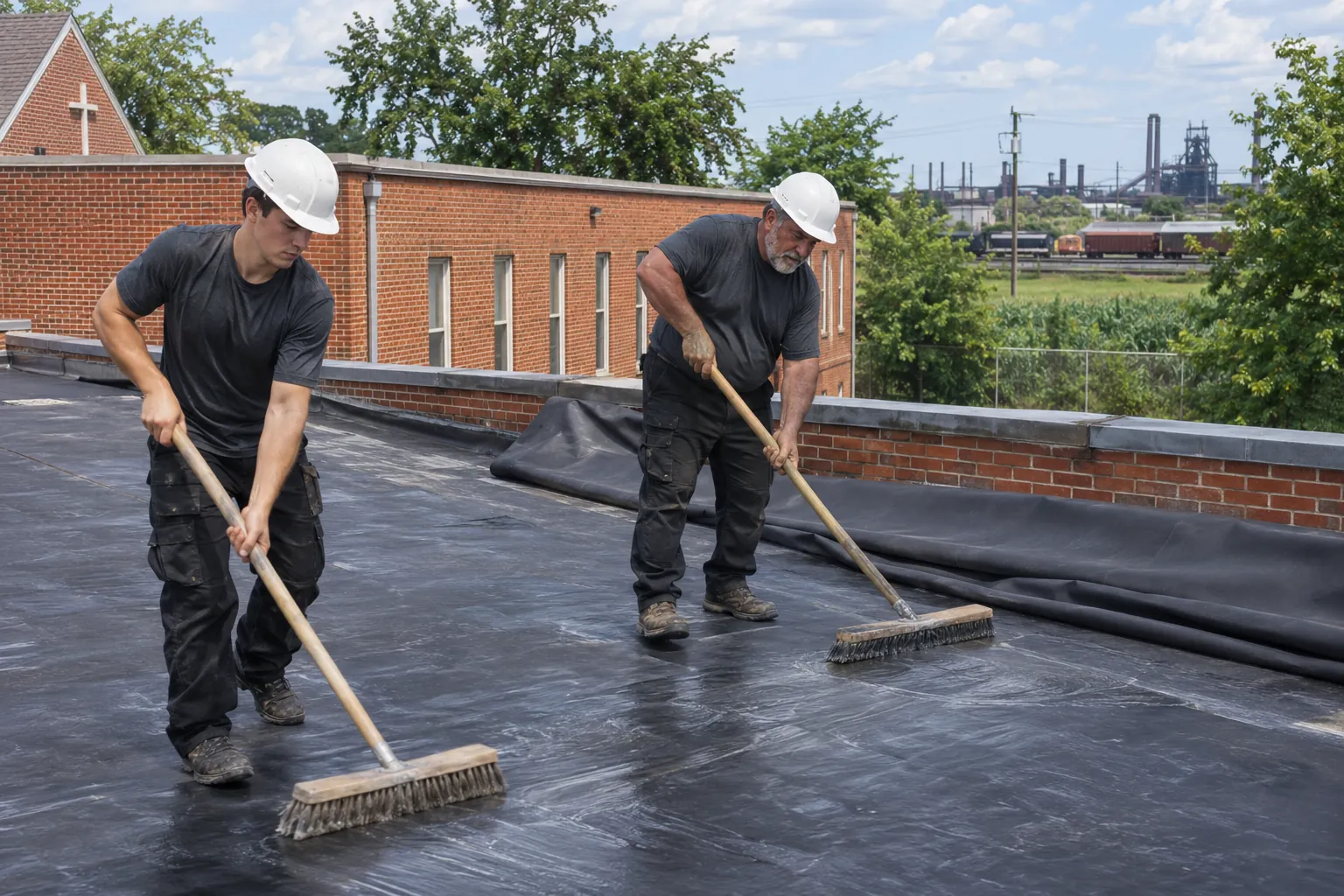
As a Hammond EPDM roofing contractor, we install black rubber membrane on low-slope church halls, offices, and shops, and replace EPDM roofs whose seams have let go.
Hammond EPDM roofing works best on low-slope roofs with few penetrations. Here is how a fit roof compares with one that needs work first.
Open fields with simple edges and a few units.
Conditions that change the scope before rubber goes down.
Older EPDM roofs fail at seams and edges well before the rubber wears out. These are the patterns we see most.
Drips appear along one line of ceiling tile, often parallel to an outside wall.
Adhesive seams peeling open after years of freeze-thaw movement at the laps.
Water stains climb the inside face of the parapet wall in a meeting hall.
Shrinkage tugging the membrane away from the wall and opening the base flashing.
Bathroom and kitchen ceilings stain first, right under plumbing vents.
Split pipe boots and dried sealant where the rubber turns up around each pipe.
New drips show up in spots that never leaked before a hail or wind event.
Hail bruises, branch punctures, and dropped-tool holes in the field membrane.
Four kinds of EPDM work cover nearly every rubber roof job. Each starts from what the seams and edges show.
Open seams are cleaned, primed, taped, and capped with cover strip. Seams the same age get checked too, since they tend to fail together.
Rubber flexes in deep cold, so damage collects at seams, boots, and edges. Those get checked each spring after the thaw.
When seams fail roof-wide or cores come up wet, the old roof comes off and new insulation and membrane go down in sections.
New termination bars, edge metal, and coping hold the membrane at walls and edges where shrinkage pulls hardest.
A rubber roof done right fixes the edges and seams that drove the old one to failure.
EPDM rubber stays pliable in sub-zero weather, so the field rides out freeze-thaw cycles and the work shifts to the seams and edges that get the closest attention.
Primer and factory seam tape replace the liquid adhesive that failed on older rubber roofs, and cover strip goes over each splice that takes extra stress.
Termination bars and new edge metal anchor the membrane at every wall, so shrinkage over the years cannot pull the base flashing loose.
Punctures from hail or tools get cleaned, primed, and covered with a matching patch, a repair any roofer familiar with rubber can make on a cold day.
Have the seams and edges checked before the next freeze pries them farther apart.
Rubber roofs go down section by section, with each seam taped the day it is laid.
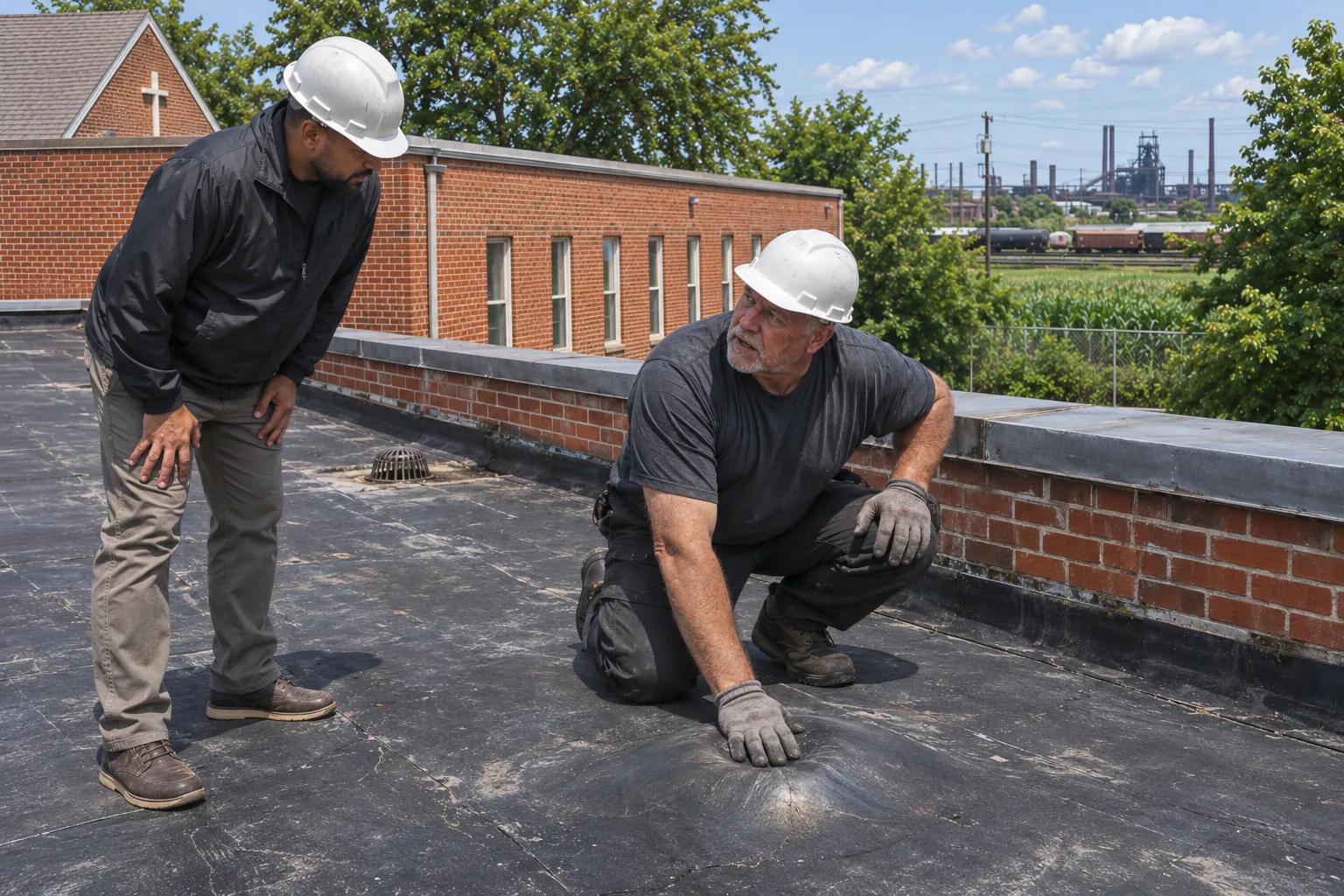
The roofer tests seams along the field, looks at every boot and wall, and cuts cores to see whether insulation stayed dry.
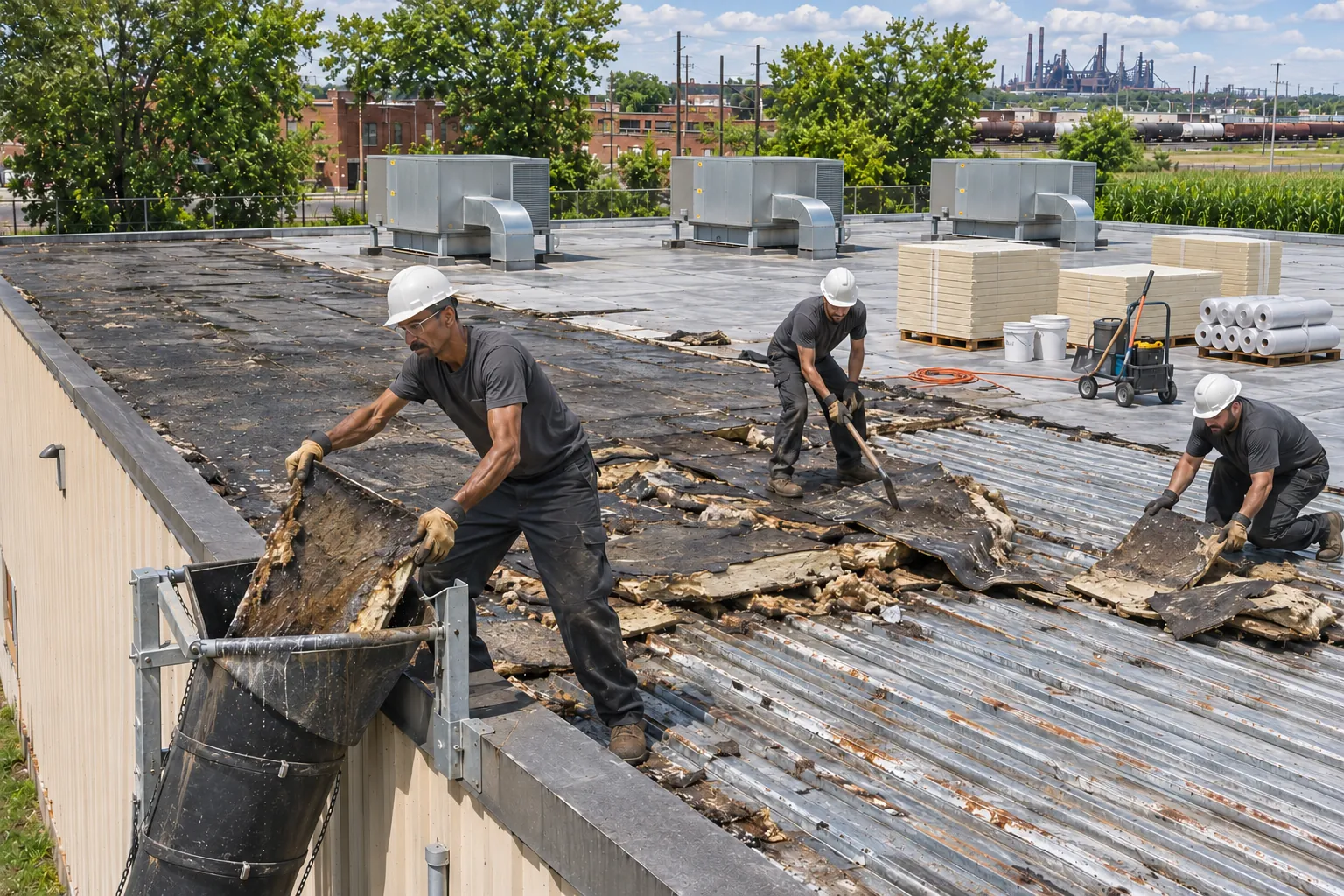
Old rubber and wet boards come off one area at a time, and new insulation is fastened before the crew moves on.
Membrane is adhered or fastened, relaxed in place, and every splice is primed and taped with cover strip where needed.
Termination bars, boots, and edge metal finish the perimeter, and each seam is checked by hand before handover.
Buildings with a rubber roof often carry one of these on another section.
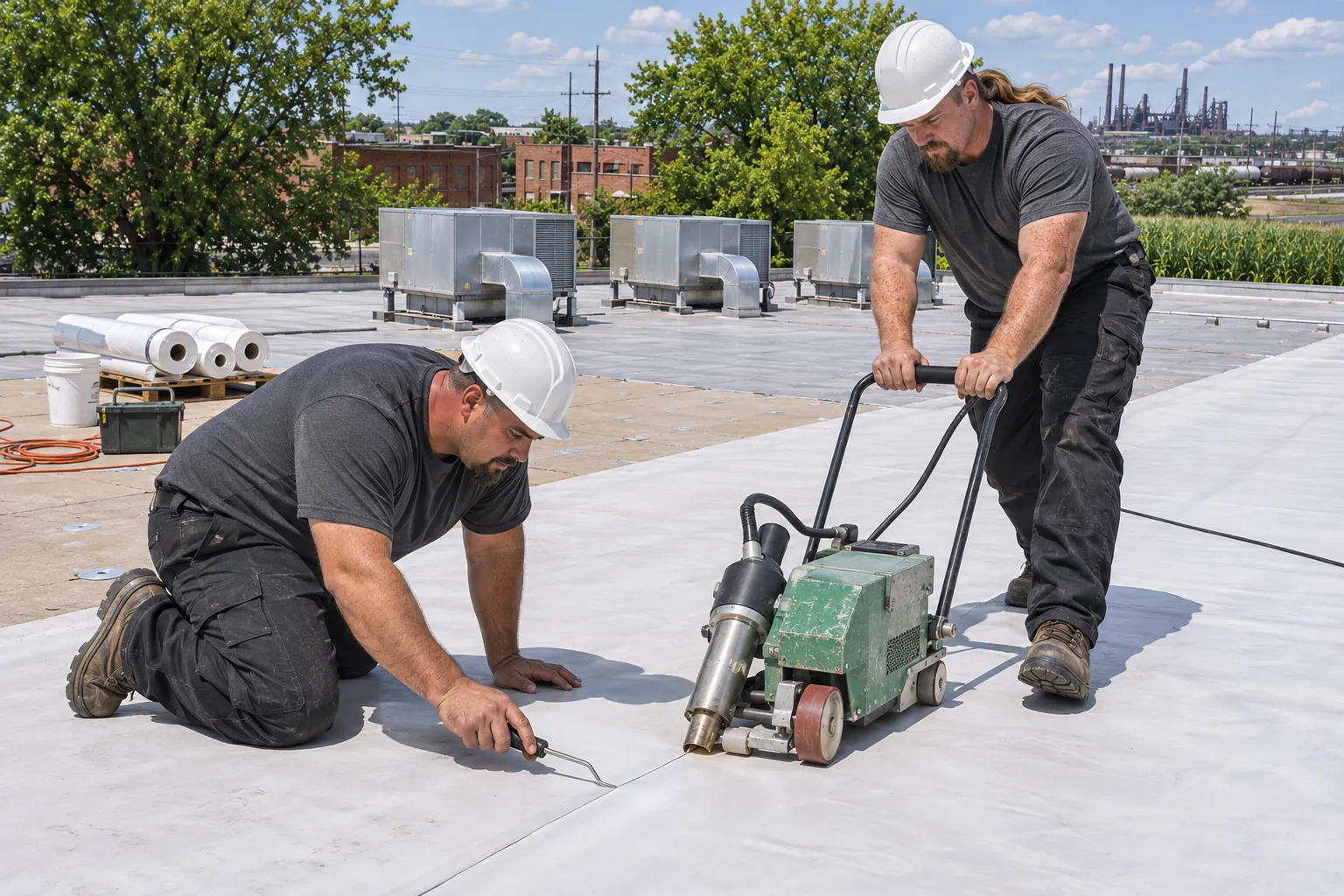
Welded white membrane for wide, flat warehouse and retail roofs.
TPO Roofing →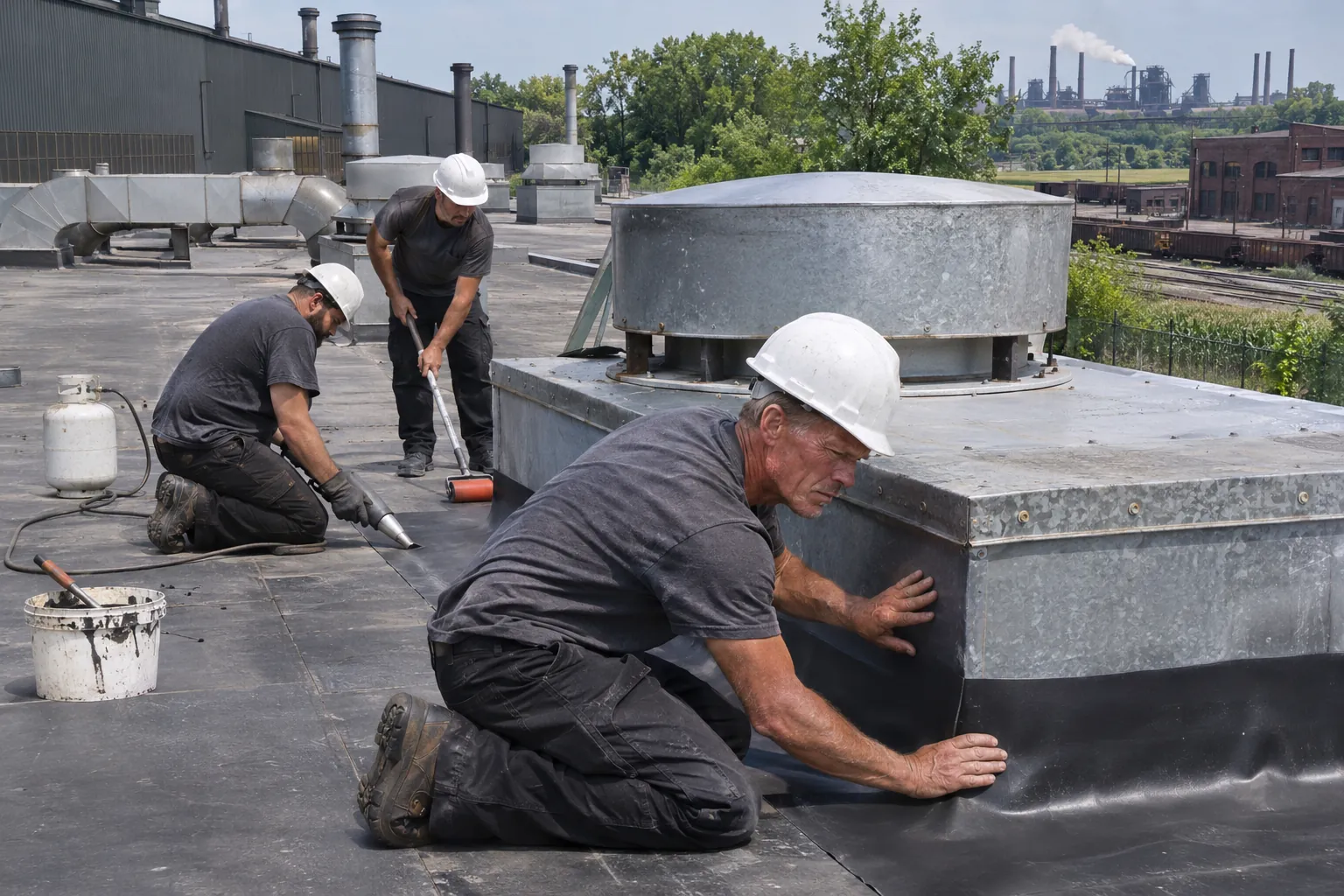
Plant roofs built around stacks, curbs, heat, and service traffic.
Industrial Roofing →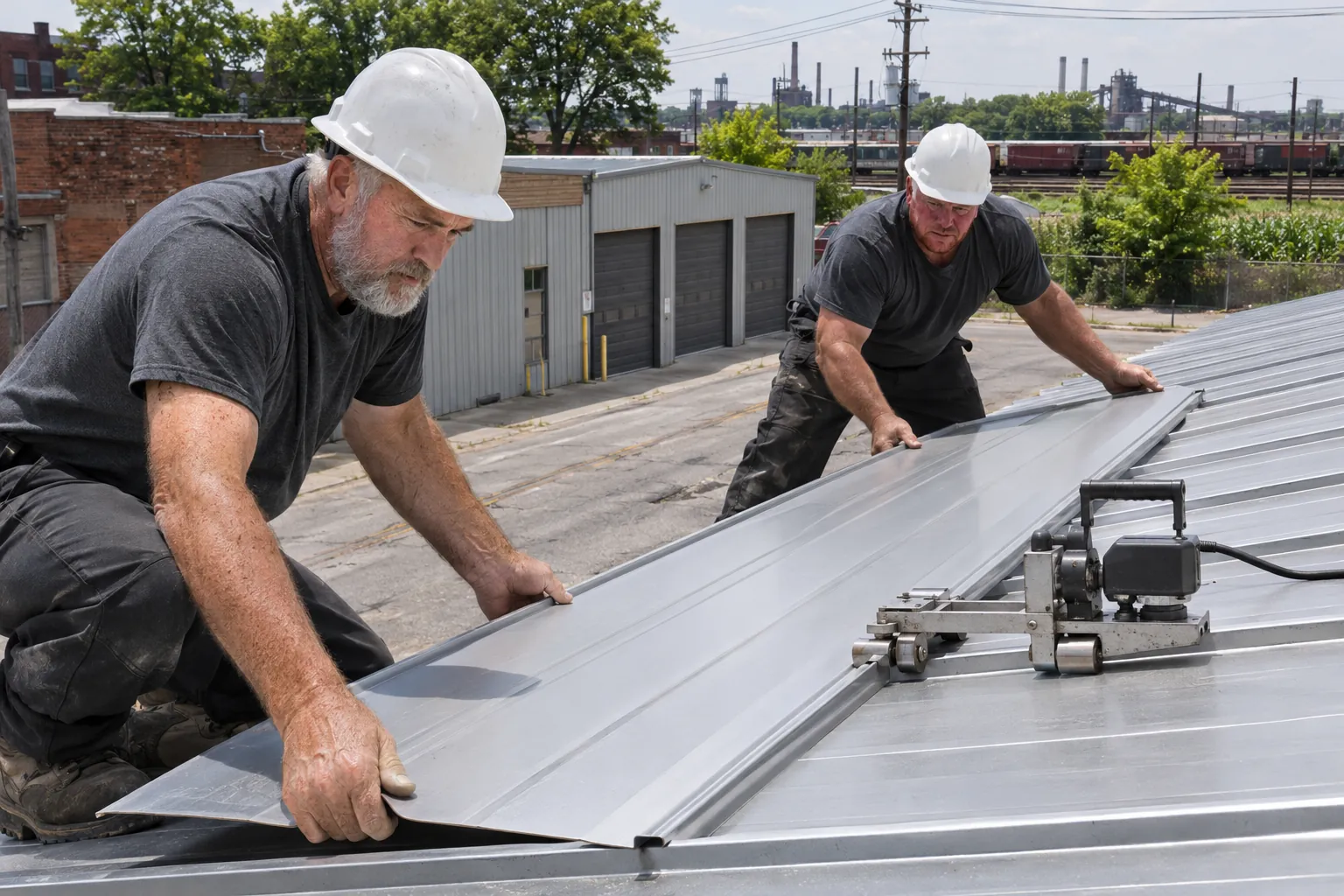
Steel panels for shops, storage buildings, and sloped retrofits.
Commercial Metal Roofing →A failed seam is cleaned, primed, and resealed with seam tape, with cover strip run over any length that opened. Older adhesive seams pull apart from years of freeze-thaw, so once one goes, the rest of that roof gets checked.
Twenty to thirty years, set by membrane thickness, attachment, drainage, and upkeep. Seams and flashing need work before the rubber wears out. Roofs that drain well and get seam checks reach the longer end.
Seam separation, shrinkage pulling flashing off walls, punctures, and split pipe boots lead the list. Church halls have big flat sections over meeting rooms, so a small seam leak can travel a long way before a stain shows.
TPO is white with welded seams and suits roofs where cooling and seam strength matter. EPDM is black rubber with taped seams that stays flexible and patches simply. Drainage, foot traffic, and the existing roof decide between them.
Yes, when the old roof is the only layer, the insulation tests dry, and shrinkage has not torn the edges. A cover board goes between the two. Wet cores or a second existing roof mean the old rubber comes off.
Church halls tend to have open flat sections with few penetrations, which suits rubber sheet. Seams are taped, edges are terminated firmly, and the work is scheduled around services and events in the hall below.
Tell us where the rubber roof leaks, and we will set up a seam and edge check.