Warehouse Roof Replacement After Years Of Patches
Inside The Building
Leaks move from aisle to aisle no matter how many patches go on above them.
On The Roof
Patch over patch on an aging field, with wet insulation spread between the old repairs.
As a Gary commercial roofing contractor, we replace large warehouse and industrial roofs one section at a time, so loading docks and production keep running underneath.
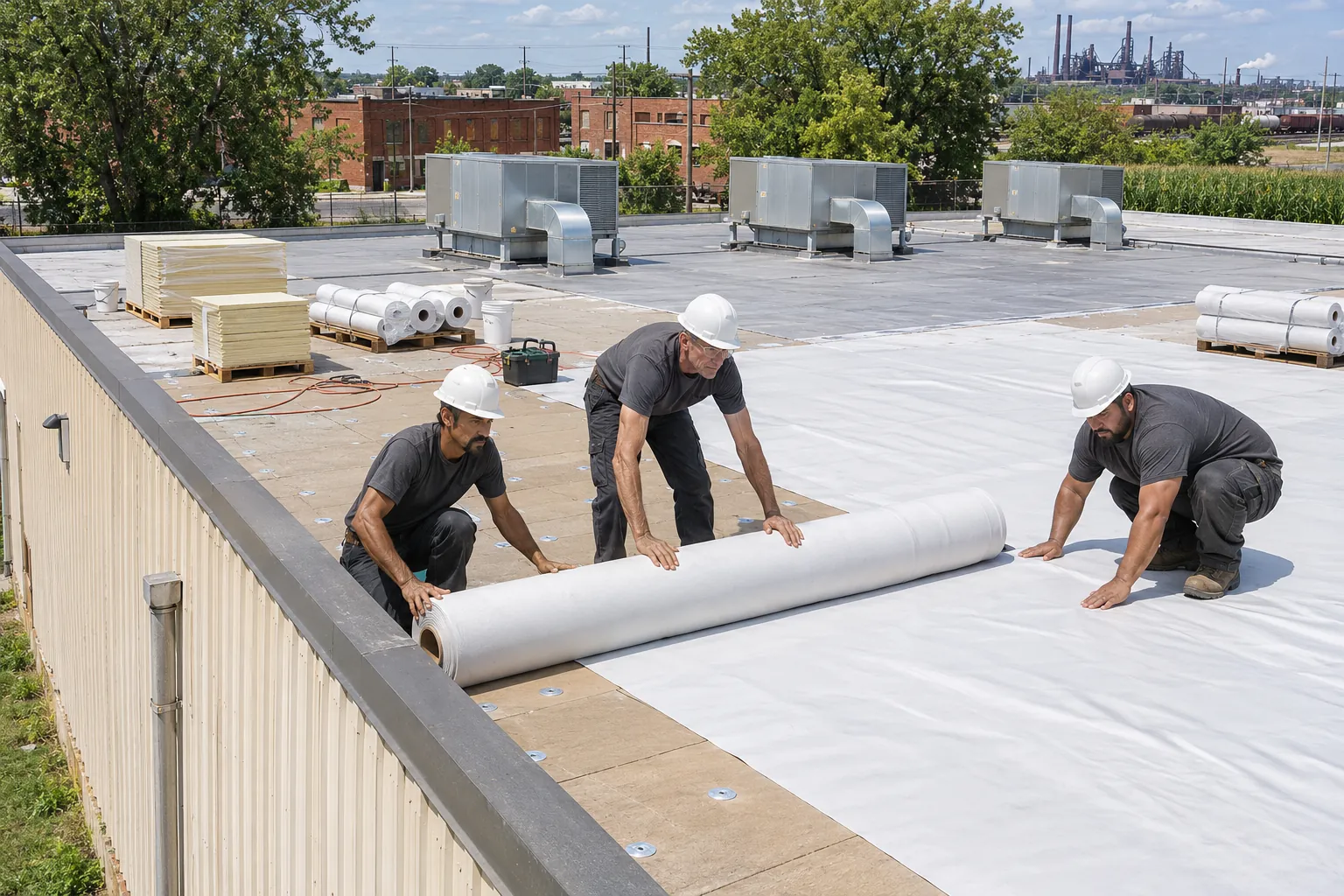
Gary commercial roofing jobs tend to cover acres, so the whole schedule is built around sections.
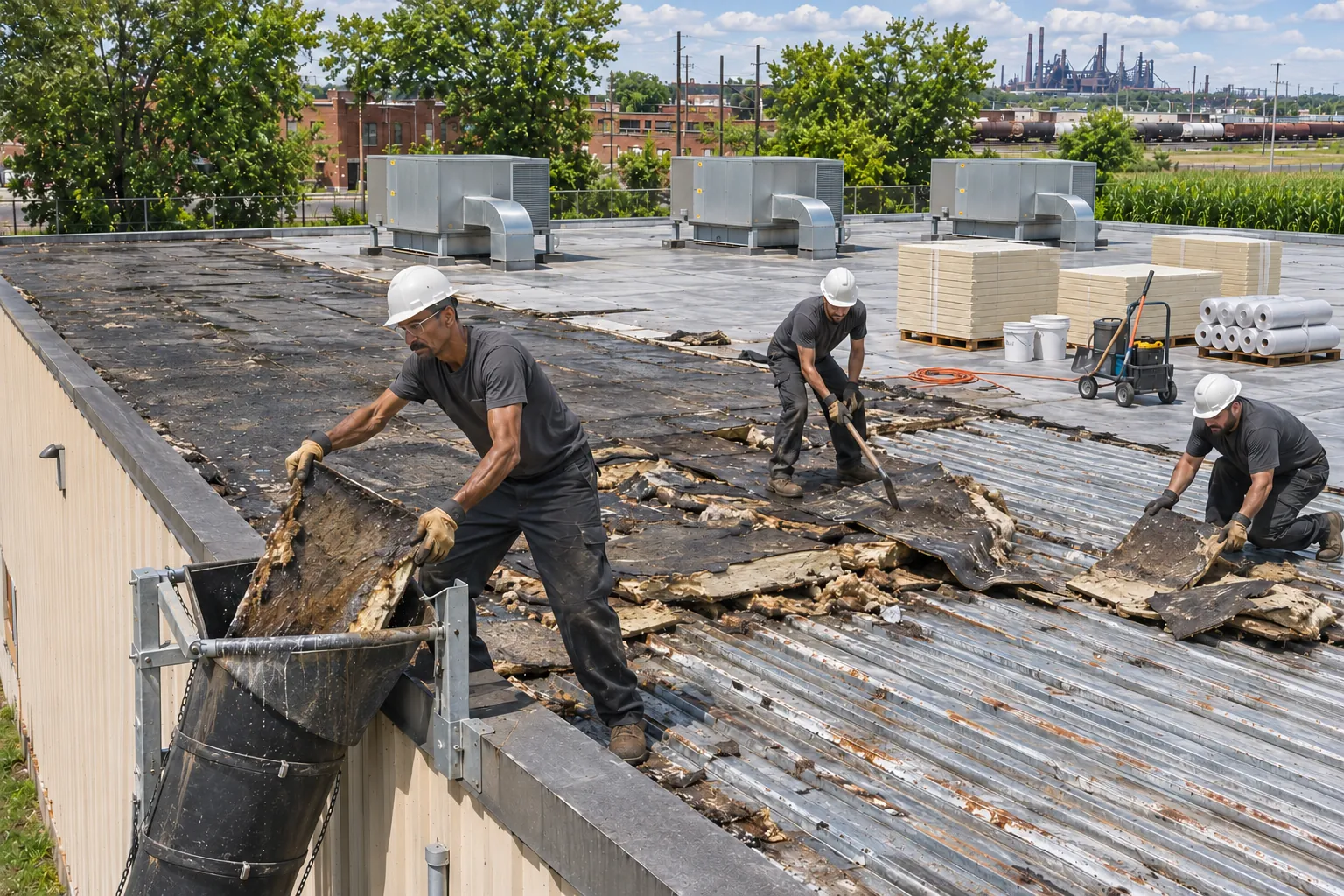
Big roofs are split into zones that a crew can tear off, insulate, and cover before it leaves. Each zone is sealed at its edge with a temporary tie-in, so a night storm stays out of the bays still waiting their turn.
Zones follow the building, starting over the docks or the bays that leak worst. Shipping and production move around one zone at a time instead of the whole floor.
Large roofs hide trouble in the middle of the field. These are the patterns that lead most Gary owners to call.
Leaks move from aisle to aisle no matter how many patches go on above them.
Patch over patch on an aging field, with wet insulation spread between the old repairs.
Racking near the center of the building rusts at the base after wet weeks.
Deck deflection at mid-span holding water far from the nearest drain.
Cores pulled during a past repair showed two roofs already on the deck.
Two old roof layers, so the next roof has to start from bare steel.
Wind rattles the roof edge above the dock doors during storms.
Edge metal and gutters pulled loose over truck bays, letting water behind the fascia.
Orange flakes fall from the steel deck onto racking and aisles below.
Long-term leaks rusting deck flutes where wet insulation sat against the steel.
Working in zones changes how the building runs during the job as much as the finished roof.
Zones over the docks are scheduled for slow shipping days, so trucks keep loading under the rest of the roof while one strip of membrane goes down.
Crews begin with the bays that leak worst, which ends the worst ceiling drips in the first week instead of the last.
Temporary tie-ins seal each open zone to the old roof before dark, so racking and stock below unopened bays stay dry until their turn.
A single written scope prices each zone separately, so the job can be split across budget years when an owner wants it phased.
Four systems cover the big roofs we replace across Gary.
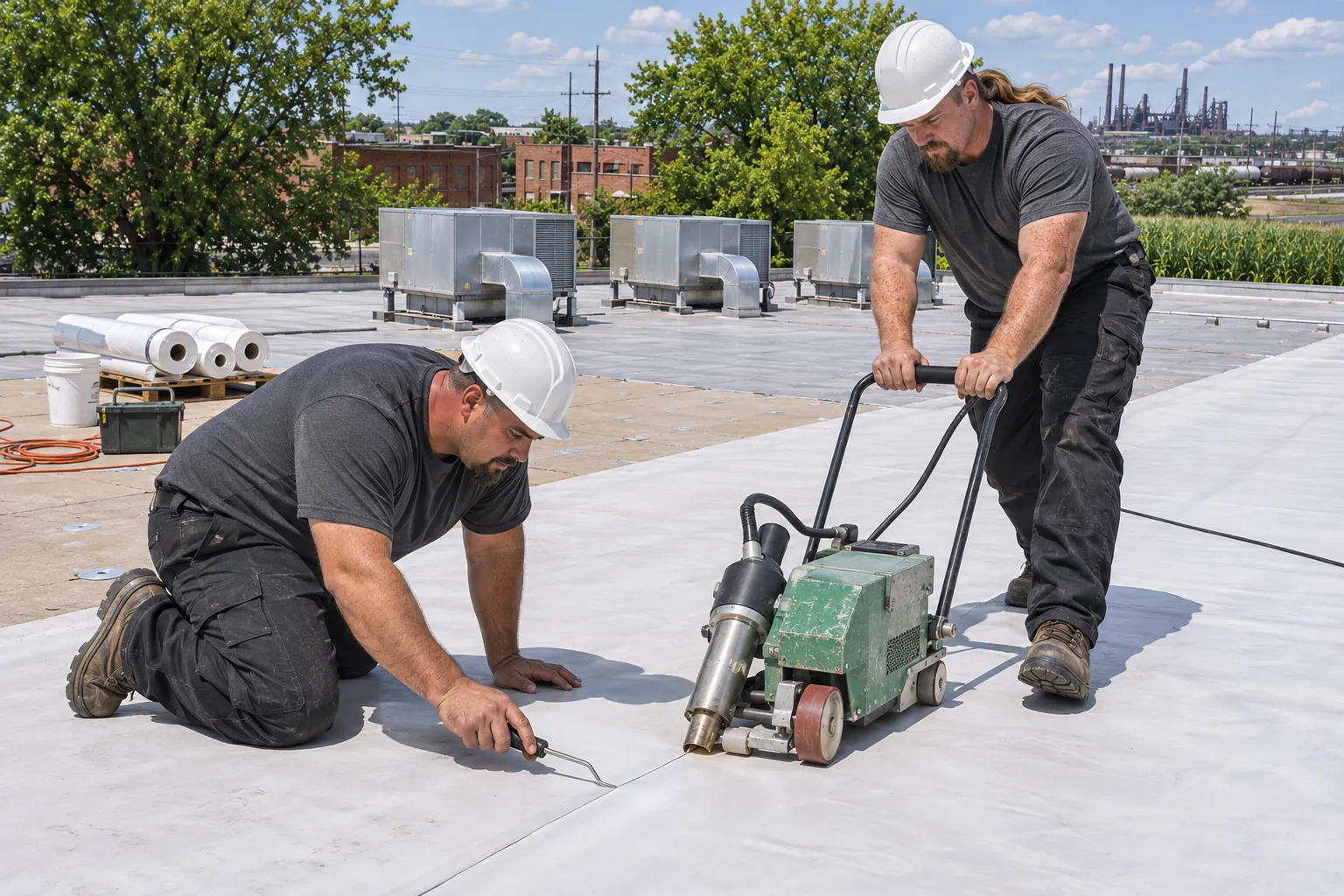
Wide white rolls cut the number of laps across a Gary warehouse field and keep the roof cooler over stored goods in summer.
TPO Roofing details →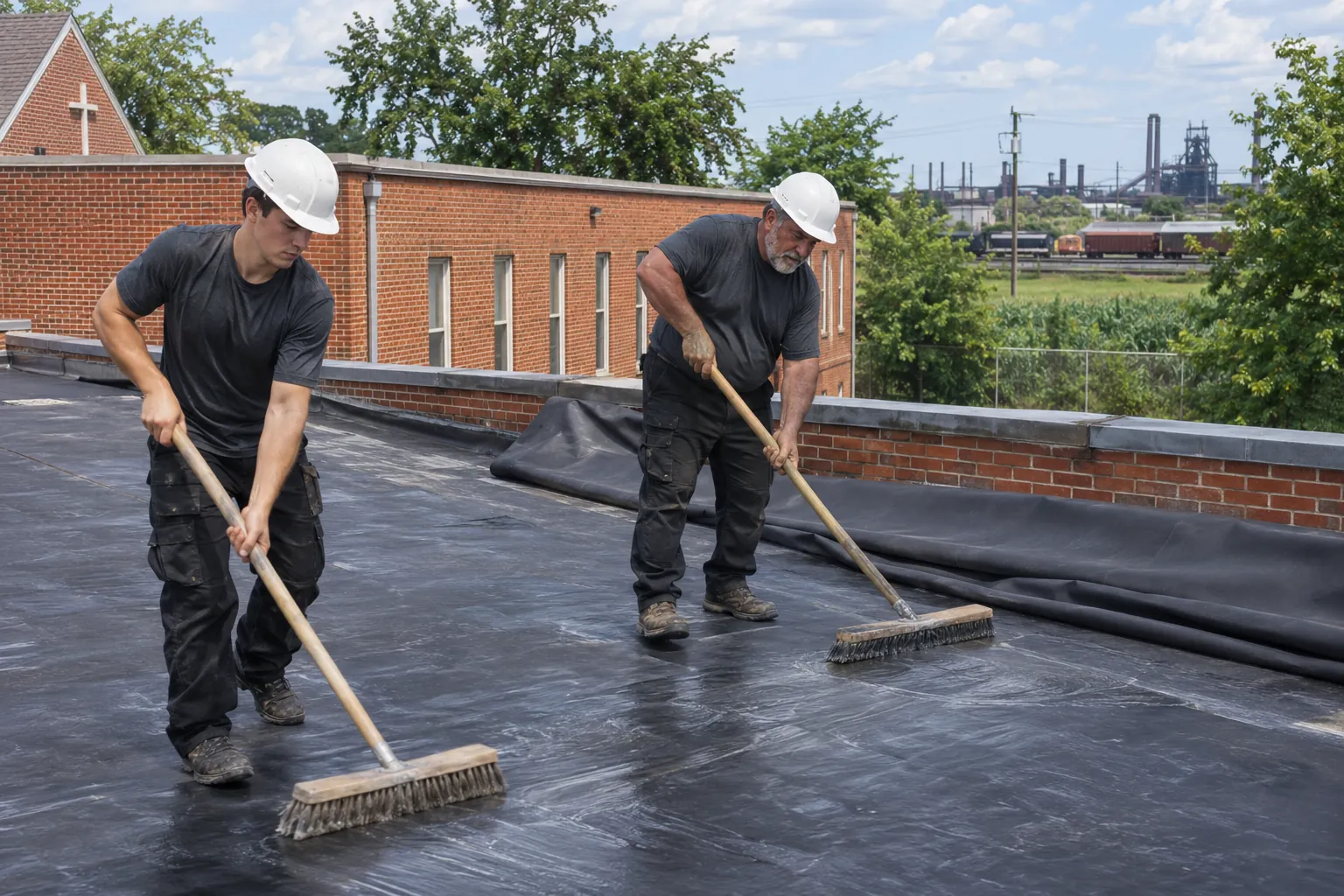
Rubber sheet for older low-slope sections and additions where the existing roof is already EPDM and drains are few.
EPDM Roofing details →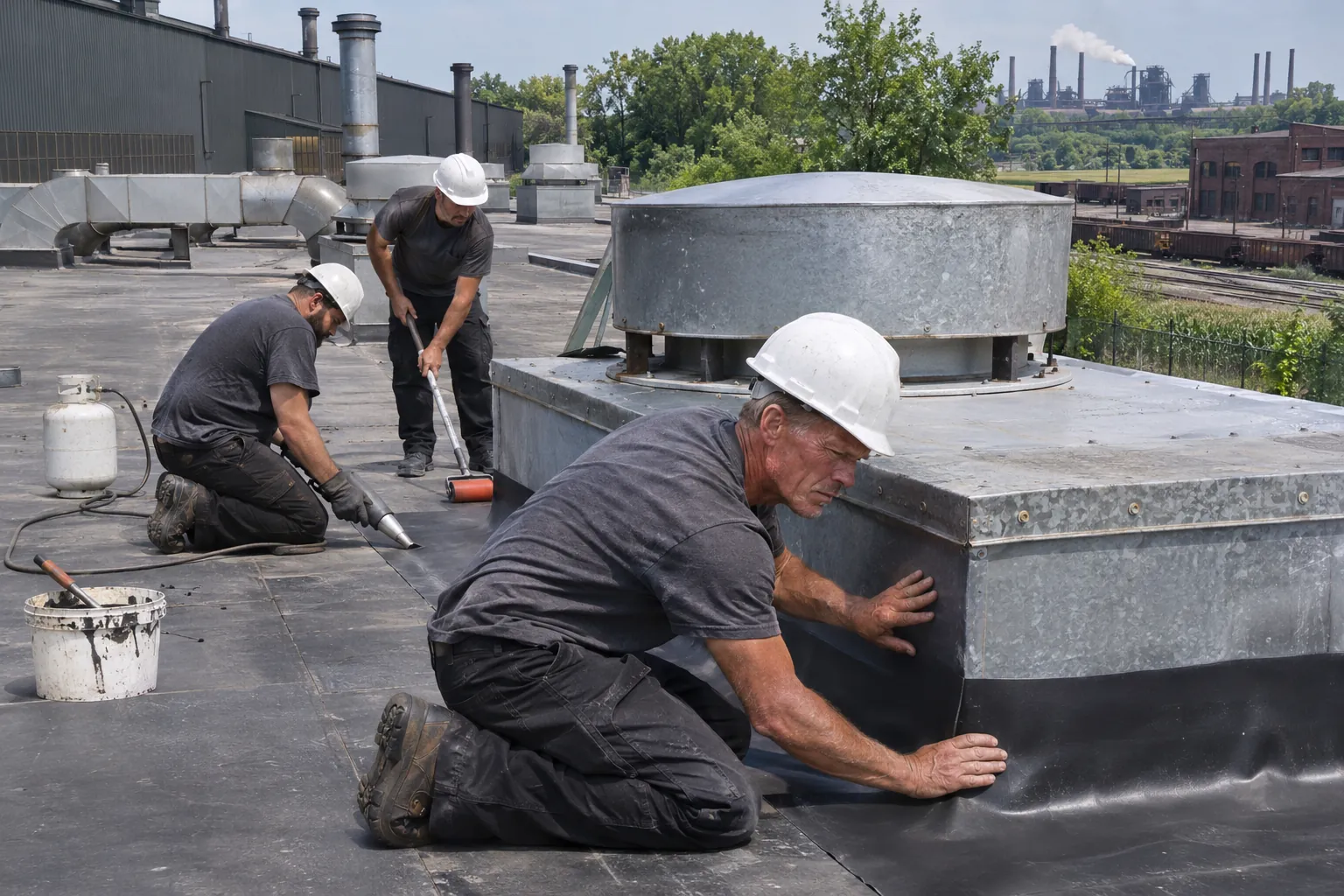
Heavier membrane and cover board over Gary process buildings where trades cross the roof every week to service equipment.
Industrial Roofing details →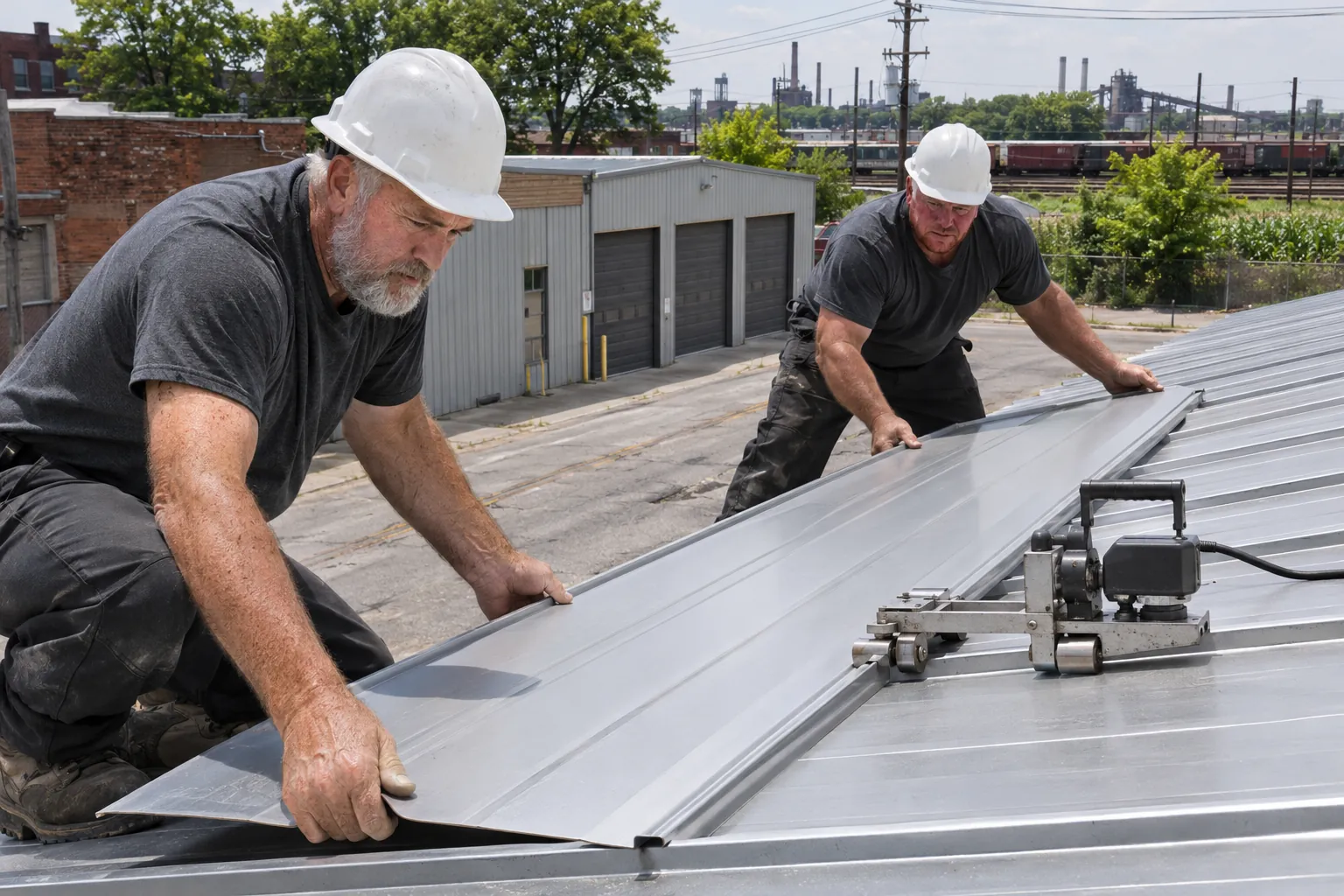
Heavy-gauge panels on pitched storage and support buildings, with snow guards over doors and walkways.
Commercial Metal Roofing details →Get core cuts across the field and a zone-by-zone scope for the whole roof.
Every sectioned job in Gary follows these four stages.
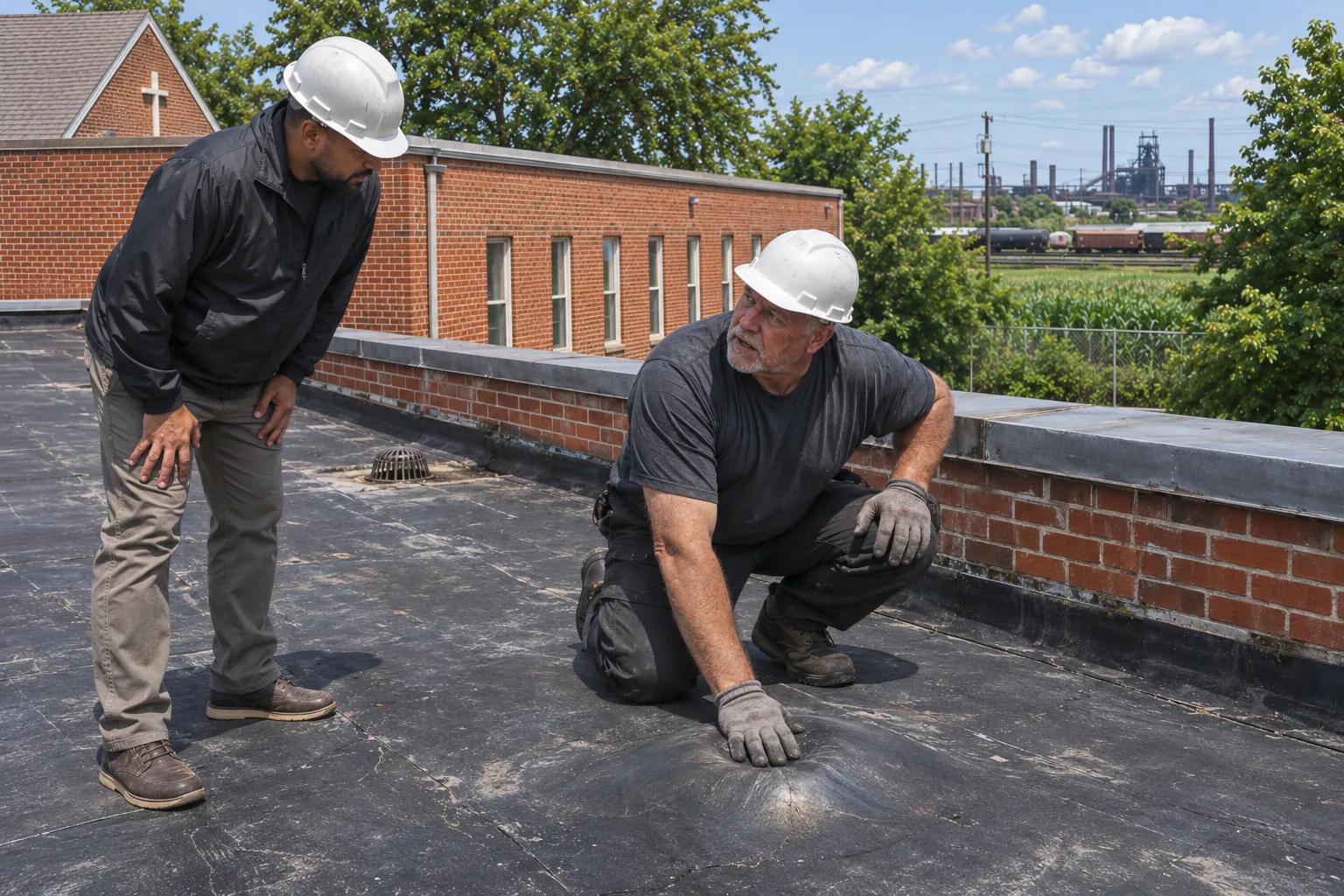
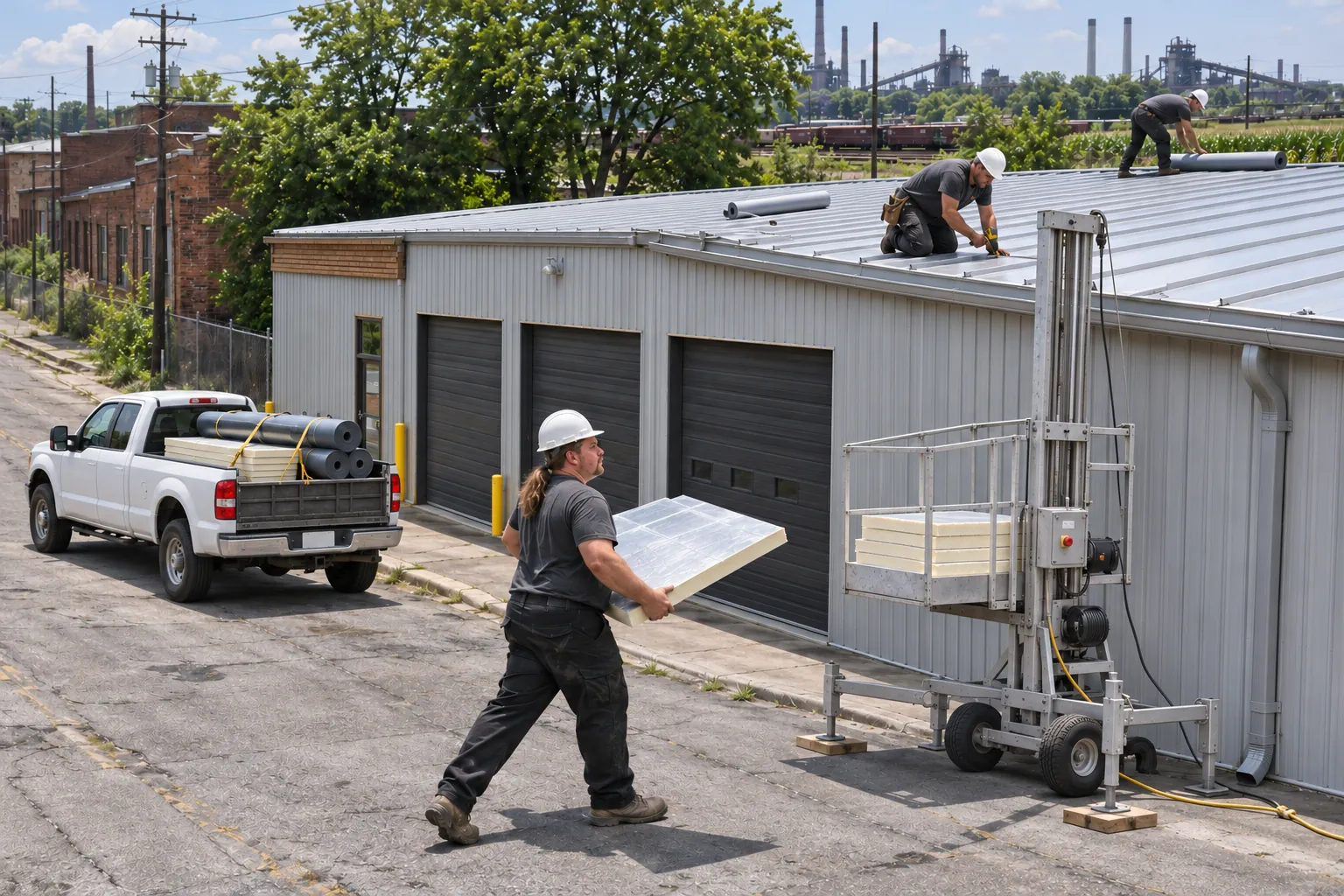
Cores taken across each bay show where insulation is wet, how many layers sit on the deck, and which zones need to go first.
The roof is split into zones sized to one day of work, ordered by leak severity and the shipping schedule below.
Each zone comes off to the deck, gets insulation and membrane, and is tied in to the old roof before the crew leaves.
Finished zones are probed and walked, and you sign off on each one before the next starts.
We roof commercial buildings in these towns too. Elsewhere? Call us or send us a message.
Home base: plants, rail warehouses, church halls, and offices.
Plant roofs crowded with stacks, fans, and curbs.
Office and medical roofs over people working all day.
Yes. TPO, EPDM, industrial, and metal roofs all go on Gary buildings, most of them large warehouses and plants. Those jobs run in sections so work keeps moving inside, and each starts with an inspection and moisture check so the new roof sits on a dry deck.
It follows roof size and how many zones the map holds. A crew finishes one zone per working day in most cases, so a large warehouse runs several weeks. Weather days push the schedule, never the quality of a tie-in.
Zones over the docks are timed for light shipping days, and material is staged away from truck courts. Forklift aisles under an open zone get closed for that day only.
Wet boards are removed and replaced at full thickness before new membrane goes down. Leaving them would trap water against the deck and rust it. The scope lists an allowance for extra wet board found once the roof is open.
Yes. Rusted deck panels found during tear-off are replaced or plated over before insulation goes down, and the scope prices that work per square foot so there are no surprises mid-job.
Zones priced separately in the scope can be split across years, starting with the bays that leak worst. Temporary tie-ins keep the unopened sections working until their turn, and the finished zones carry new drains and flashing from the start.
Send the address and roof size, and we will core the field and map the zones.