Industrial Roofing

Hammond Industrial Roofing Contractor

Which Roof Holds Up Over Furnaces, Fans, And Busy Curbs?

As a Hammond industrial roofing contractor, we install roofs on plants and mill support buildings, built around stacks, curbs, exhaust residue, and the heat rising from production.

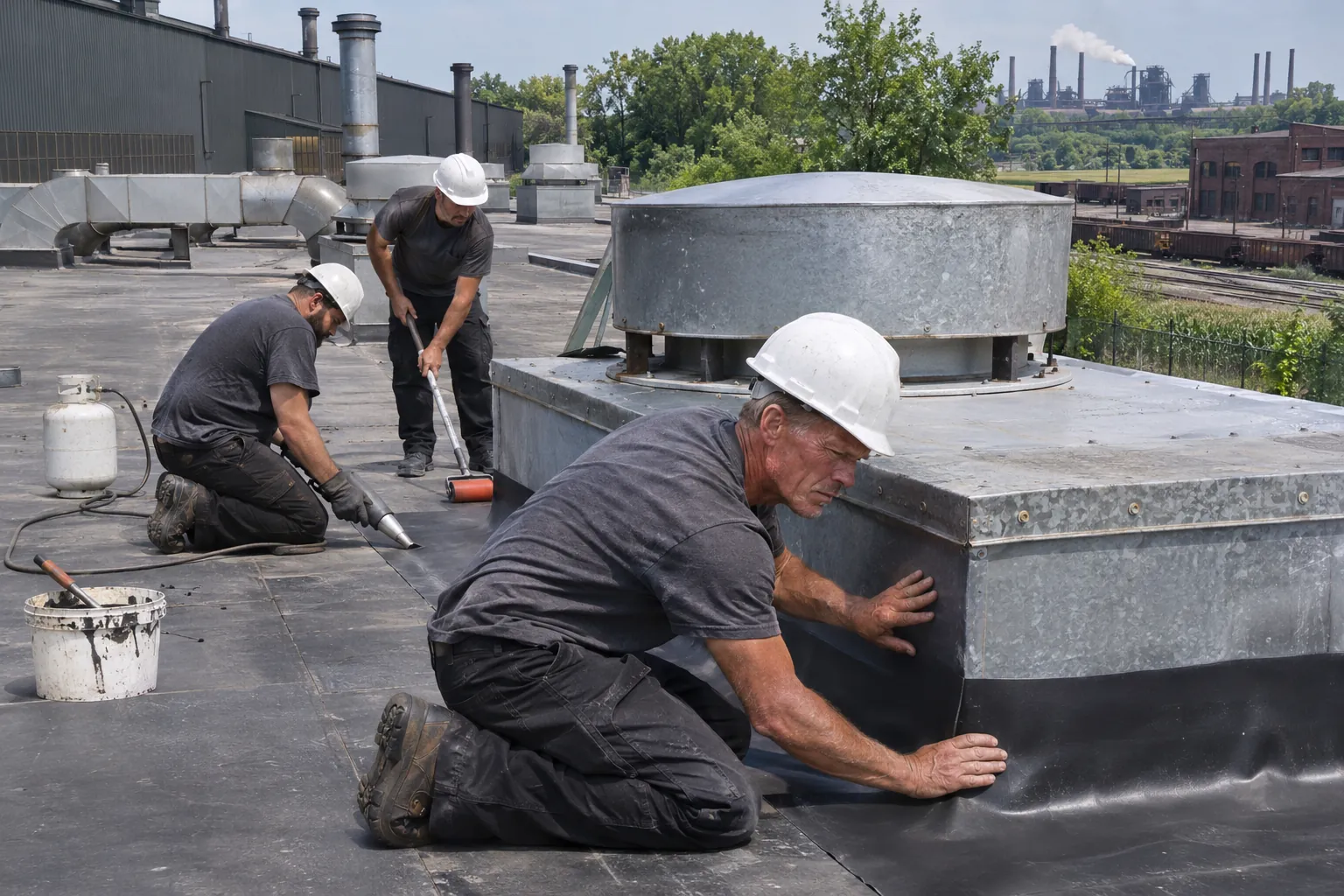
Roofer flashing the membrane around a rooftop equipment curb on an industrial roof
  • Plants And Mill Buildings
  • Stacks And Curbs Flashed
  • Pads To Every Unit
  • Units Lifted When Needed
Is This Roof A Fit?

Membrane Or Metal: Hammond Industrial Roofing Options

Hammond industrial roofing usually means one of two paths. The roof slope, exhaust, and equipment load pick between them.

TPO Or EPDM

Thick Single-Ply

For flat plant roofs crowded with equipment.

Slope
Flat to low slope
Exhaust Exposure
Membrane checked for residue
Rooftop Equipment
Each curb flashed in membrane
Traffic
Pads and cover board
Best Use
Process buildings and warehouses
Panel System

Heavy-Gauge Metal

For pitched mill and storage roofs.

Slope
Low to steep pitch
Exhaust Exposure
Coated steel resists residue
Rooftop Equipment
Curbs framed between panels
Traffic
Walkways at ridge and units
Best Use
Mill support and storage buildings
Roof Symptoms

Hammond Industrial Roofing Problems Plant Managers Report

Industrial roofs fail where equipment and process meet the membrane. These are the patterns behind most plant calls.

Leaks Under Exhaust Fans

Inside The Building

Water drips onto production lines directly below roof fans after rain.

On The Roof

Cracked curb flashing and membrane softened by grease or residue around the fan.

Worn Service Paths

Inside The Building

Small leaks appear along a line between the roof hatch and the HVAC units.

On The Roof

Membrane scuffed through by boots, carts, and dropped tools with no walkway pads.

Stains Near Stacks

Inside The Building

Ceiling deck rusts in rings around stack penetrations inside the plant.

On The Roof

Heat-cracked boots and flashing that pulled away as stacks expanded and cooled.

Heat Rising Through The Roof

Inside The Building

Upper mezzanines run hot, and frost forms on the underside of the deck in winter.

On The Roof

Thin, crushed, or wet insulation that no longer slows heat moving through the roof.

Choices On This Roof

Industrial Roofing Details We Build Into Hammond Plants

Four details separate a plant roof that lasts from one that leaks at every unit.

Roofing For Manufacturing Plants

The system is matched to what runs below: heat output, exhaust residue, vibration, and how often trades walk the roof.

Industrial Roof Walkway Pads

Pads run from the hatch to each fan, stack, and unit, welded or adhered to match the membrane underneath.

Industrial Roofing Materials

TPO, EPDM, or metal goes over insulation and a cover board where traffic is heavy, after checking membrane resistance to the plant exhaust.

Roofing Around Rooftop Equipment

Curbs get membrane carried up their sides, pipes get boots, and supports sit on pads; low units are raised with your mechanical crew.

What Changes

What New Industrial Roofing Changes On A Hammond Plant

On a plant roof, the gain shows up at the equipment and on the production floor below.

Curbs That Stop Leaking

Every curb, stack, and duct gets its own flashing and metal cap, so the spots that caused most of the plant drips are rebuilt instead of patched again.

Membrane Matched To Exhaust

Membranes are checked against the oils and residue leaving the plant fans, so the sheet around each fan holds its strength rather than softening.

Paths Trades Can Use

Walkway pads from the hatch to every unit keep HVAC and electrical crews off the field membrane during the service calls a plant schedules every month.

Steadier Temperatures Below

New insulation at full thickness slows heat moving through the deck, which helps mezzanines in summer and cuts winter frost on the steel.

Drips Landing On A Production Line?

Call with the building and the bay. A roofer will check the curbs and stacks above that line first.

How The Work Runs

How Hammond Industrial Roofing Is Scheduled Around Production

Plant roofs are planned around shifts, shutdowns, and the trades who service the equipment.

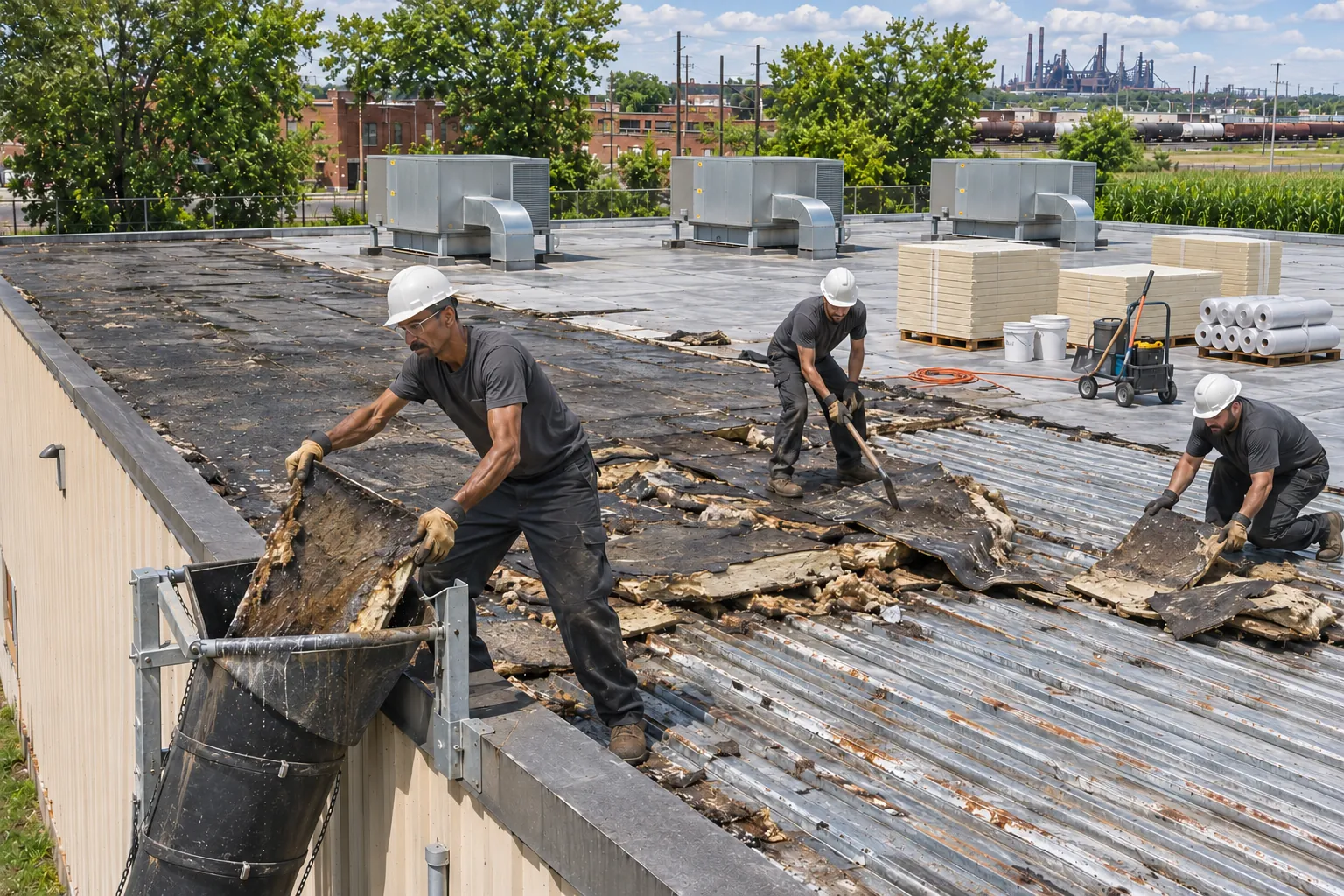
Crew tearing off an old commercial roof section down to the deck
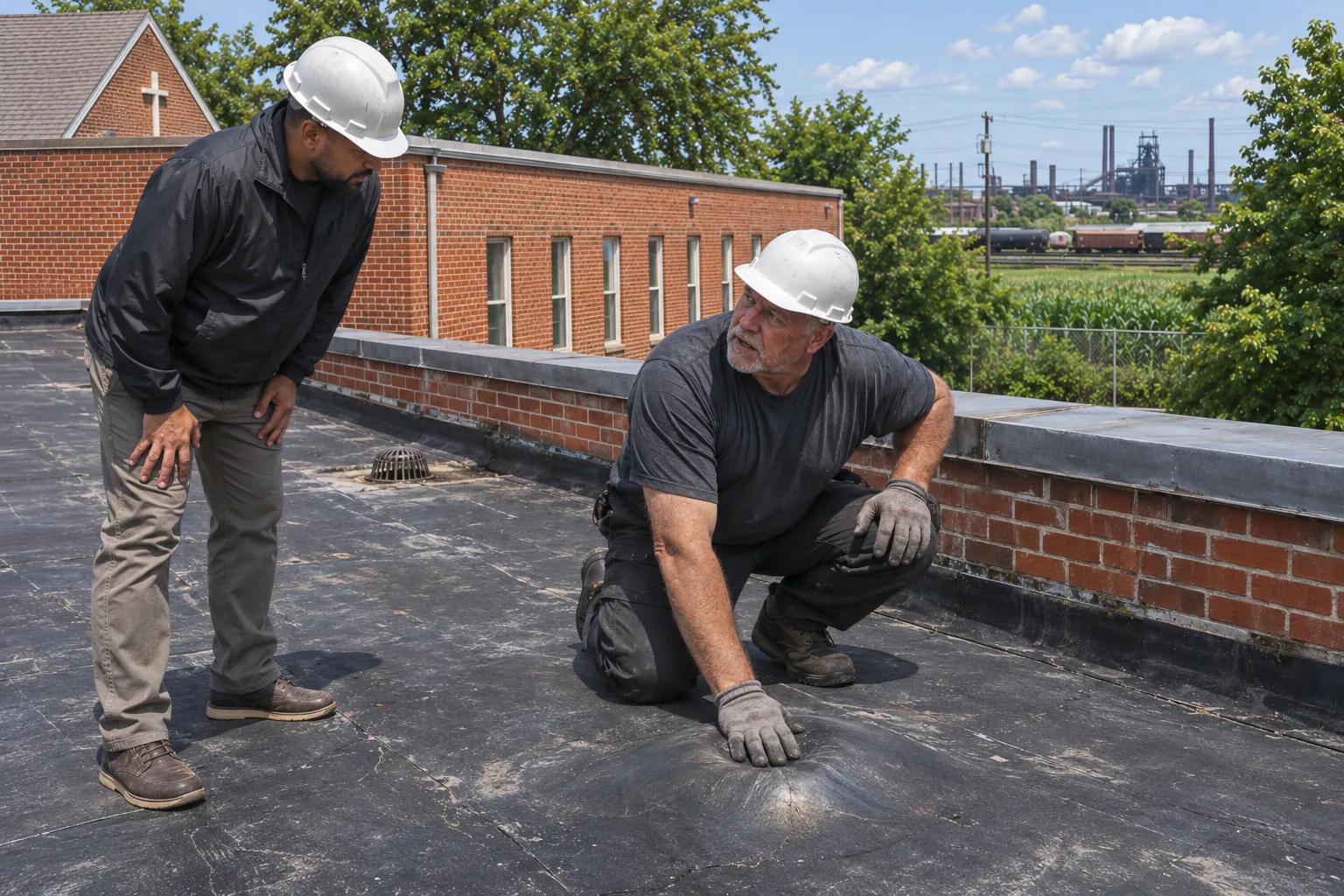
Roofer walking a commercial roof with a facility manager and pointing out worn flashing
  1. Map Equipment And Cores

    Every fan, stack, curb, and pipe is logged, and core cuts show the layers and moisture across each bay of the roof.

  2. Plan Around Shifts And Lifts

    Tear-off zones are set around production, and unit lifts or disconnects are booked with your mechanical contractor.

  3. Rebuild Bay By Bay

    Each bay is opened, insulated, and covered before the crew leaves, so the line below stays dry overnight.

  4. Flash Equipment And Lay Pads

    Curbs and stacks are flashed and capped, walkway pads go down, and the roof is walked with your maintenance lead.

Related Systems

Systems We Use On Plant Roofs

Industrial roofs draw on these systems, alone or side by side.

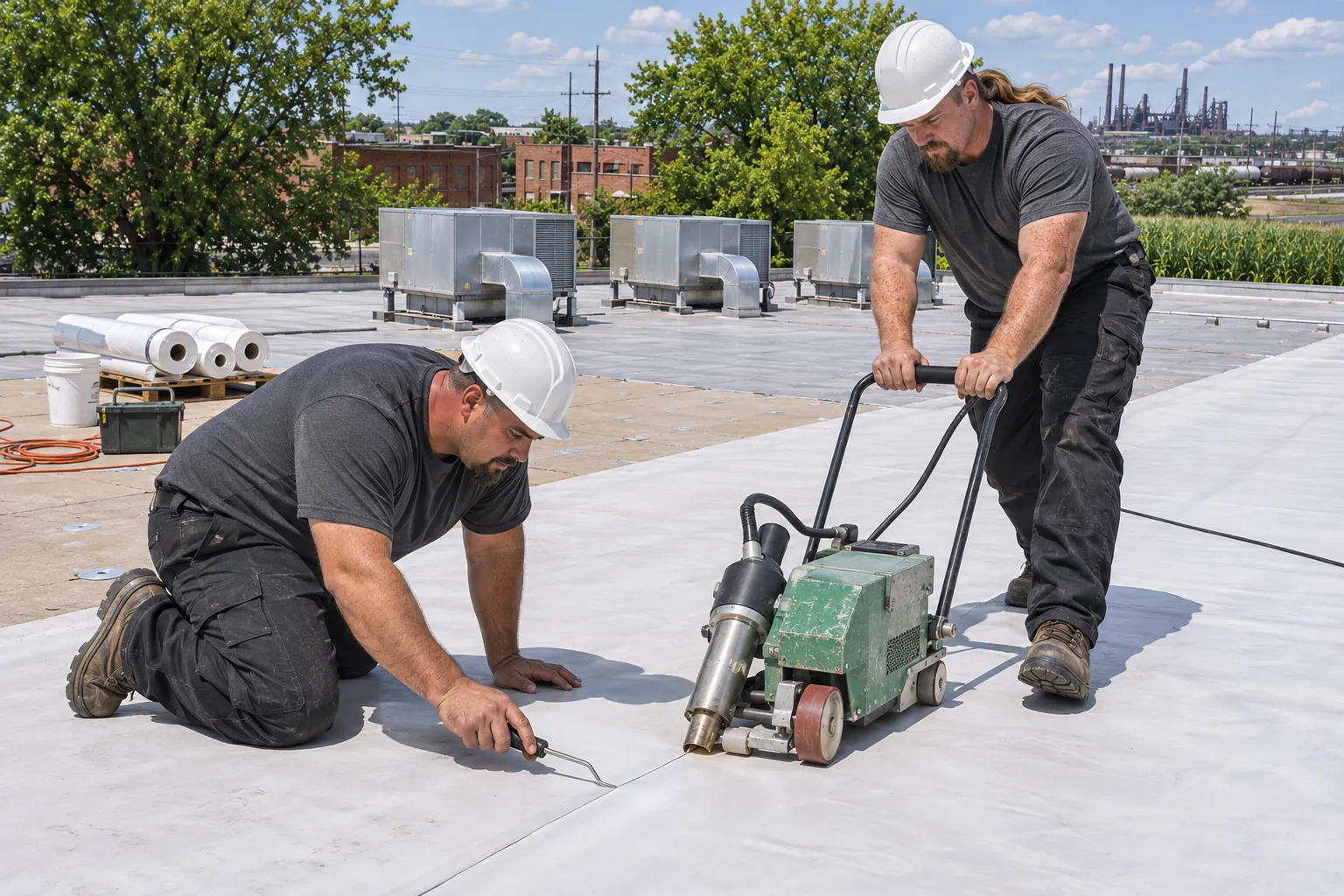
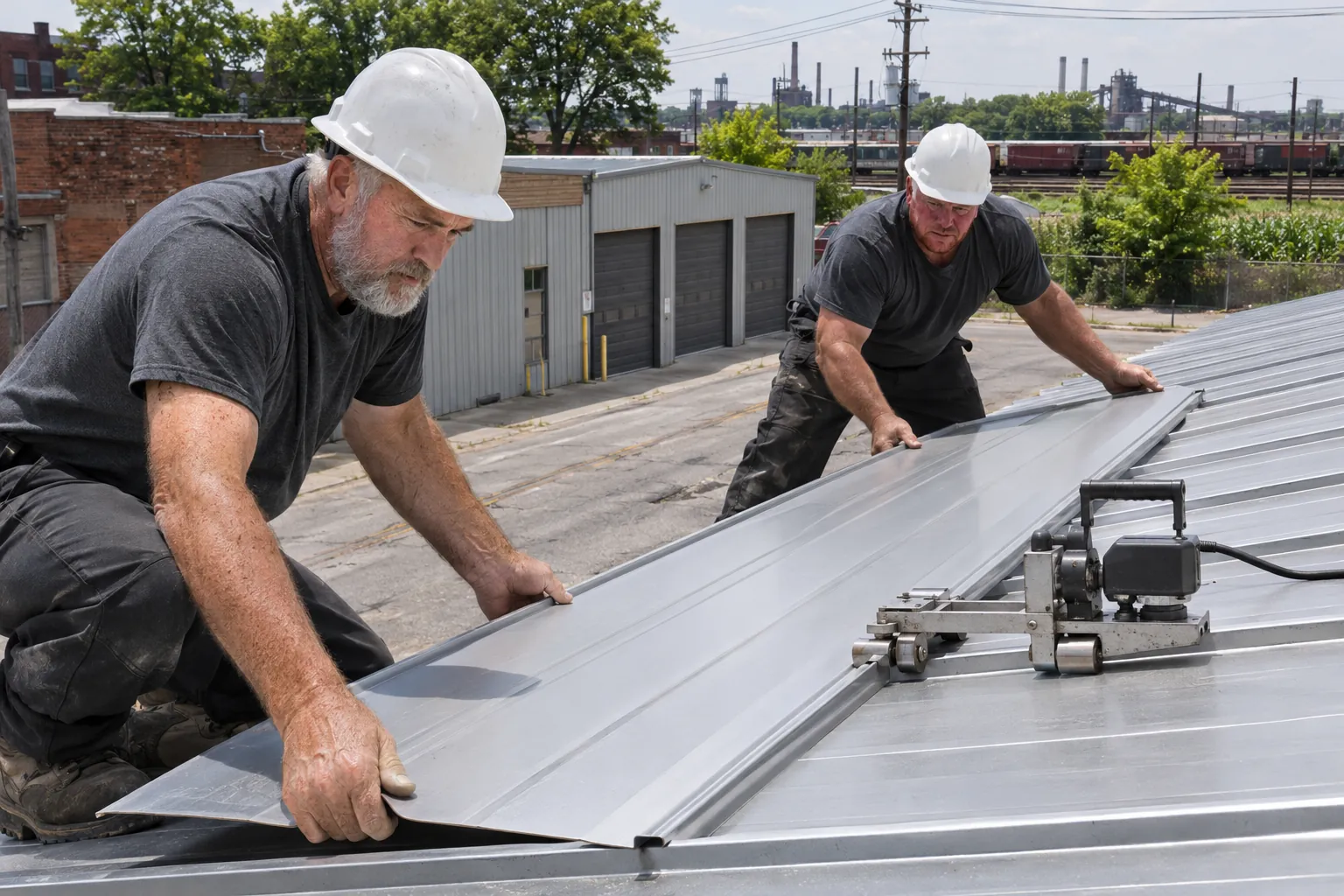
Roofer heat-welding a TPO seam with a hand welder on a commercial roof

TPO Roofing

Roof Slope
Flat to low slope
Seams
Heat-welded
Color
White, reflective

Welded white membrane for wide, flat warehouse and retail roofs.

TPO Roofing →
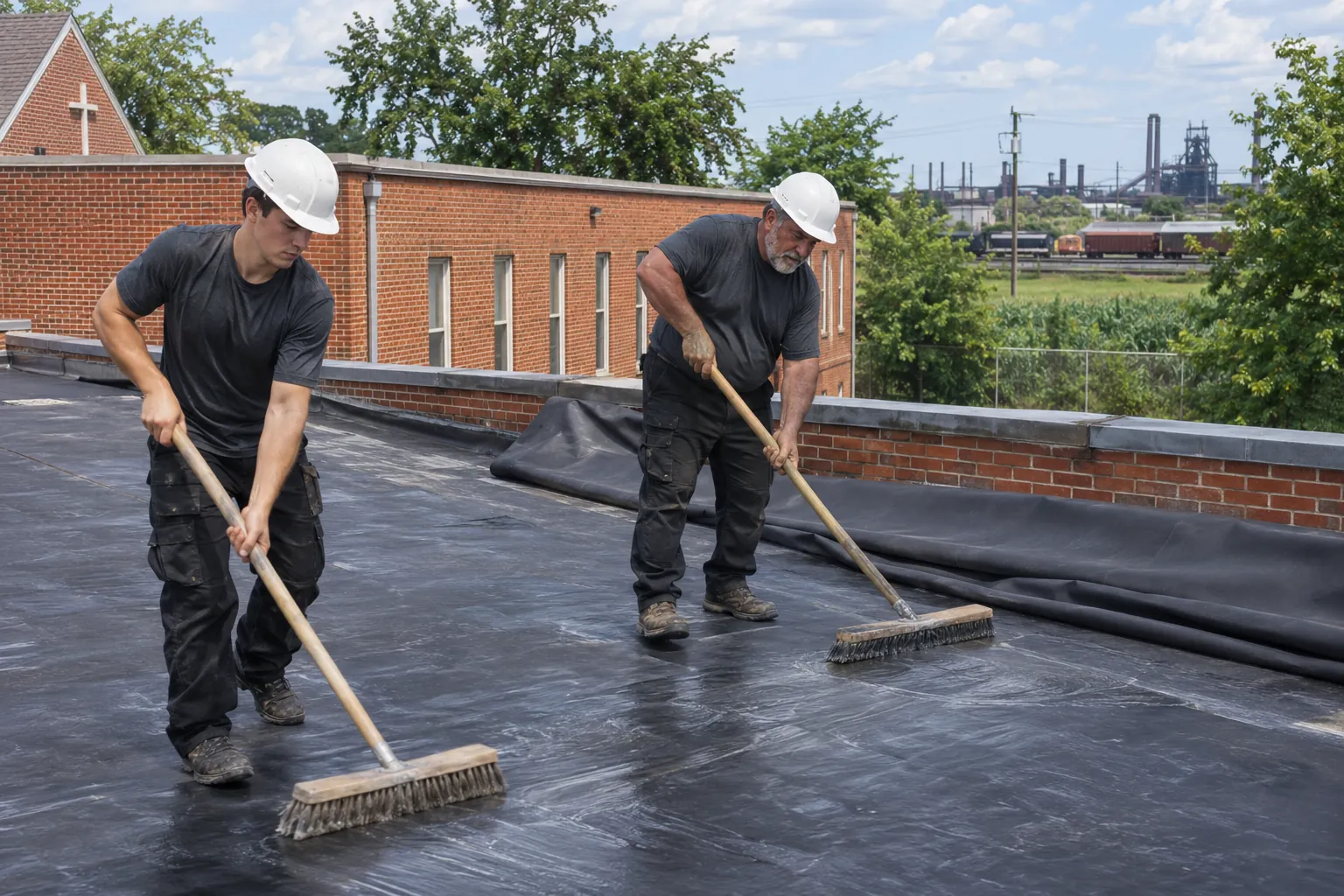
Roofers laying a black EPDM membrane on a low-slope commercial roof

EPDM Roofing

Roof Slope
Flat to low slope
Seams
Taped and primed
Color
Black rubber

Rubber membrane that stays flexible through hard Lake County freezes.

EPDM Roofing →
Quick Answers

Industrial Roofing Questions From Hammond Plants

What roofing works best for manufacturing plants in Hammond?

Matched to the process

Plants need roofs that take heat, vibration, equipment, and constant service traffic. Thick TPO or EPDM, metal on long spans, and reinforced flashing at stacks and curbs are the usual picks, chosen around exhaust, heat output, and how much equipment sits up top.

Why do industrial roofs in Hammond need walkway pads?

To protect service paths

Pads shield the membrane along the routes technicians use to reach units, fans, and stacks. Without them, boots, carts, and dropped tools wear through. Pads run from the access point to each piece of equipment and are welded or adhered to match the roof.

What industrial roofing materials are used on Hammond plants?

TPO, EPDM, or metal

TPO, EPDM, and metal panels over insulation, with a cover board where traffic is heavy. Roof size, slope, chemical exposure, and process heat narrow the choice, and membranes are checked against oil or chemical exhaust first.

How is roofing handled around rooftop equipment on Hammond industrial buildings?

Flash every penetration

Each curb, duct, pipe, and support gets its own flashing, because those joints start most plant leaks. Curbs get membrane up their sides, pipes get boots, and supports sit on pads. Units that must be lifted are coordinated with your mechanical contractor.

How does summer heat affect commercial roofs in Hammond?

Ages dark membranes

Sun drives dark roof surfaces far above air temperature, aging membrane, drying sealants, and working seams and flashing. White TPO keeps the surface cooler, and added insulation slows heat reaching the plant floor below.

Can a plant roof be replaced during a shutdown?

Yes, if planned early

A planned shutdown is the best window for bays over sensitive lines. The roof scope is written months ahead, materials are staged, and crews work the shutdown bays first while the rest follows on normal shifts.

Hire A Hammond Industrial Roofing Contractor

Send the plant address and the bays that leak, and we will plan the roof walk around your shifts.

Call (219) 389-4868