Install Now
Ready For TPO
The roof can take new membrane without major prep.
- Deck
- Firm steel or concrete
- Insulation
- Dry in every core
- Drainage
- Water reaches drains
- Existing Layers
- One roof or bare deck
- Next Step
- Recover or tear-off

As a Hammond TPO roofing contractor, we install white single-ply membrane with hot-air welded seams on warehouses, retail centers, and offices with flat roofs.
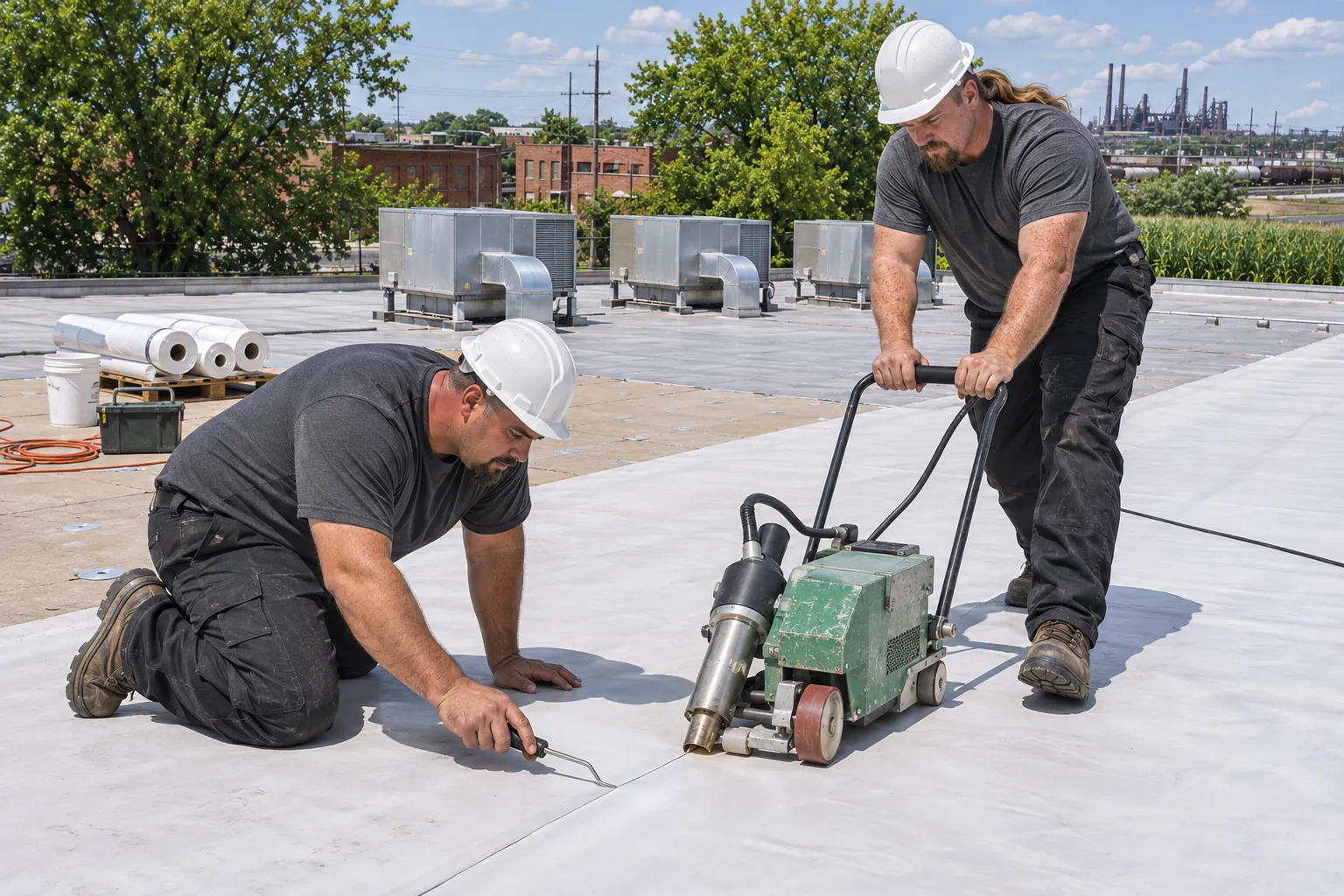
Hammond TPO roofing goes on best where the deck is firm and water drains. The cards show which roofs take it now and which need work first.
The roof can take new membrane without major prep.
Problems that come off or get rebuilt before membrane goes down.
Most TPO jobs we bid replace an older roof that shows one of these patterns inside and up top.
Rings widen over aisles after each storm, then dry out and return with the next one.
Open laps on an aging membrane and insulation that soaks up water and moves it sideways.
Offices under the roof stay warm late into the evening while rooftop units run hard.
A dark, worn surface absorbing heat, with thin or crushed insulation underneath.
Facility staff report a damp smell near one wall after every heavy storm.
Ponding rings at mid-span where the deck has sagged and water never reaches a drain.
Roof leaders back up and splash at the floor drain during downpours.
Drain bowls set low under old patches and baskets packed with gravel from a past roof.
Four decisions shape every TPO roof we put on. Each one is made from the core cuts and the building below.
One dry existing roof and a firm deck allow a recover with a cover board. Two roofs, or wet insulation in the cores, mean tear-off down to the deck.
Mechanically fastened TPO goes on in winter; adhesives wait for their temperature range. Seams are welded only on a clean surface free of frost.
Sixty-mil membrane covers most roofs. Eighty-mil goes where foot traffic, hail exposure, or long service life justify the extra cost.
Welded pads mark the path from the hatch to each rooftop unit, keeping tools and boots off the field membrane.
The change shows up inside the building first. These four come straight from the membrane and the layers under it.
Hot air fuses each lap into the membrane, and every weld is probed before the crew moves on, so the laps that leak first on older roofs become the strongest line.
White TPO reflects much of the summer sun that a dark roof absorbs, which keeps the deck cooler and eases the load on rooftop units over long July afternoons.
Wide rolls cover a warehouse field with fewer seams per square, and less lap length means fewer places for water to find its way under the sheet.
Years later, a punctured spot gets a matching TPO patch welded over it, with no adhesive cure time, so a repair can close the same afternoon it is found.
Get core cuts and a TPO scope before the next freeze opens those laps wider.
A TPO replacement moves across the roof in sections so the building stays dry each night.
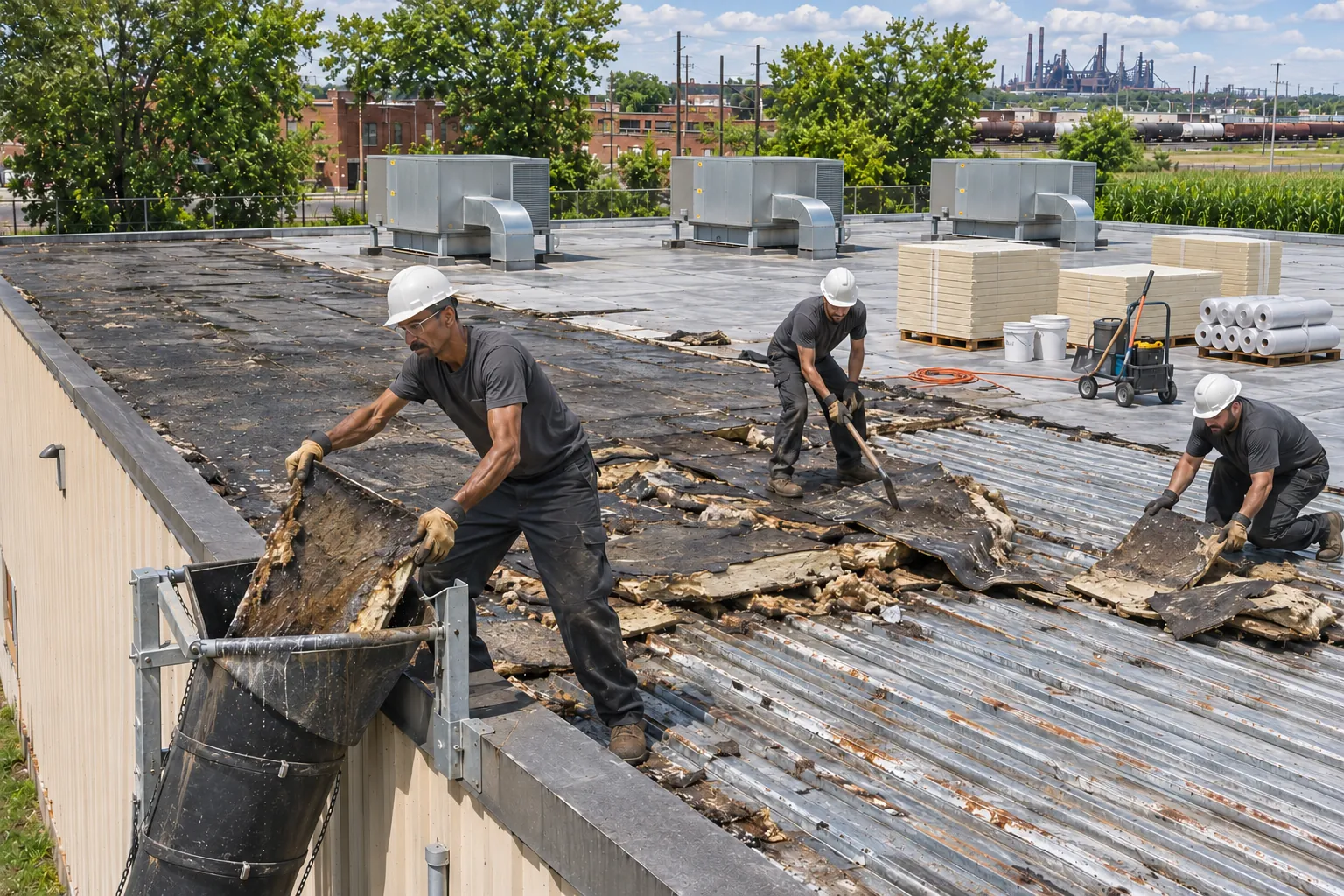
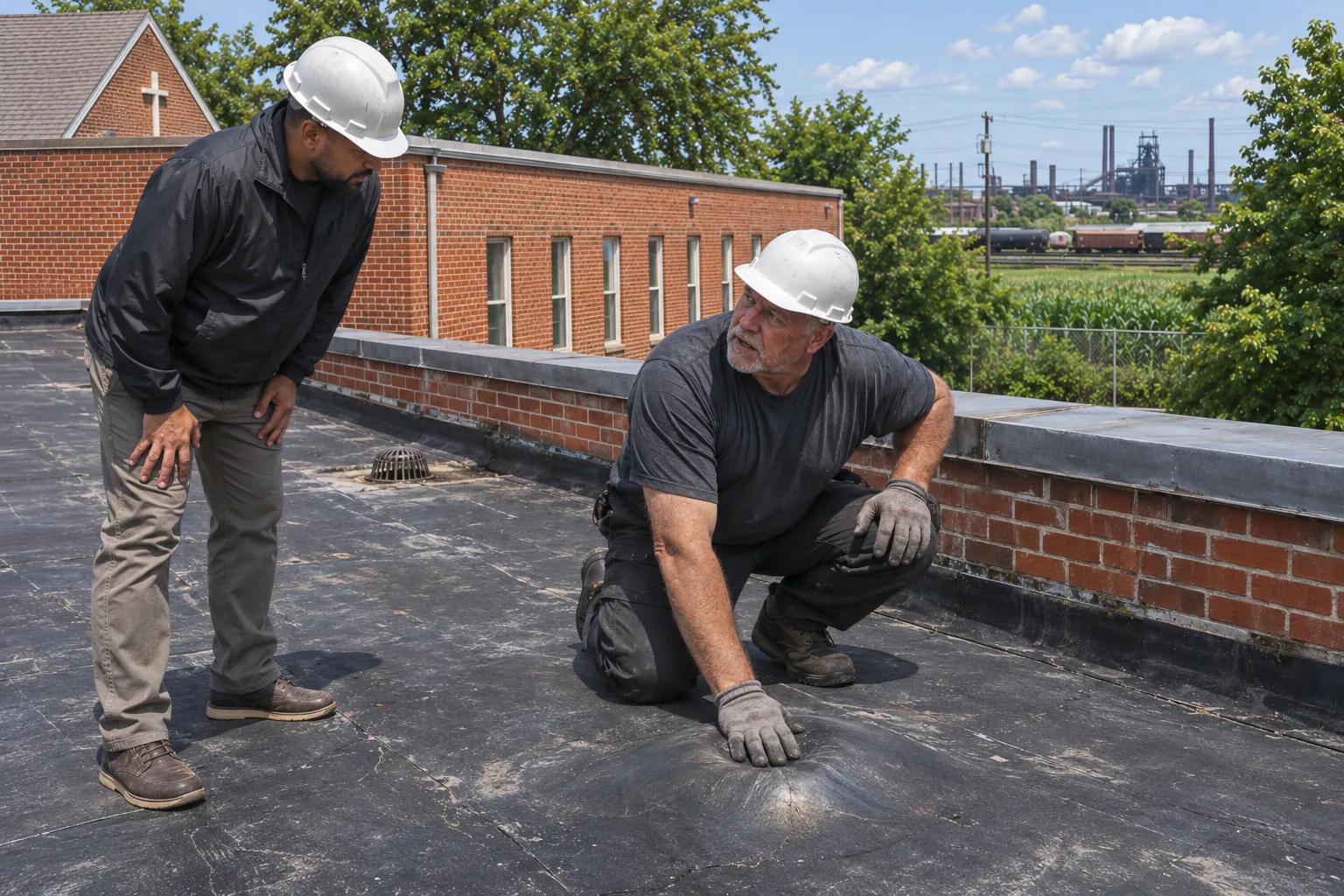
Core cuts read the layers and moisture, and drains, curbs, and edges are measured so the scope covers every detail the new membrane meets.
Wet or doubled roofs come off to the deck; a firm single roof gets a cover board fastened over it before insulation.
Insulation is fastened, membrane rolls out across it, and seams are hot-air welded, then probed along their full length.
Curbs, pipes, and edges get TPO flashing and metal caps, pads run to each unit, and the roof is walked with you.
Some buildings carry two systems. These sit beside TPO on the same properties.
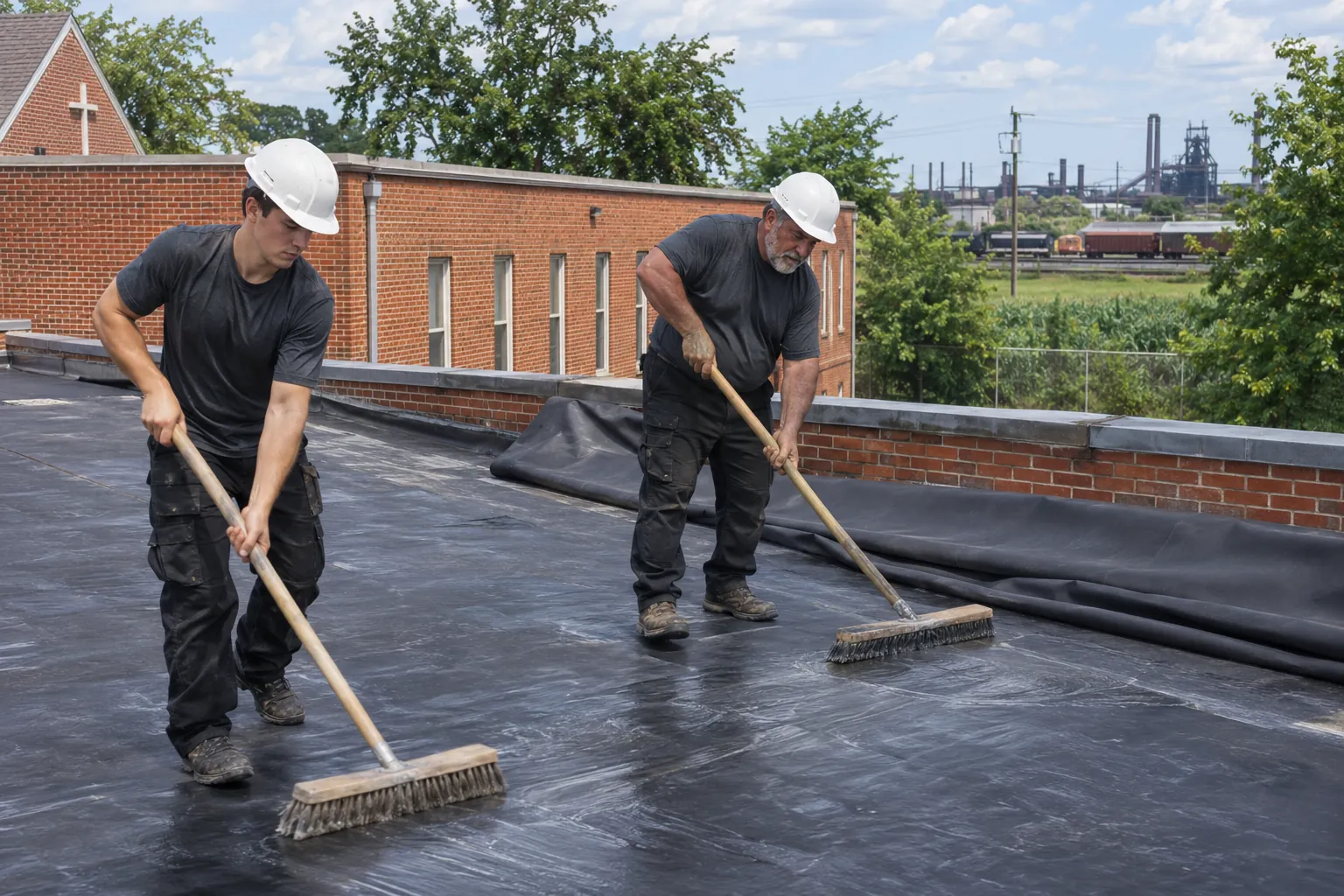
Rubber membrane that stays flexible through hard Lake County freezes.
EPDM Roofing →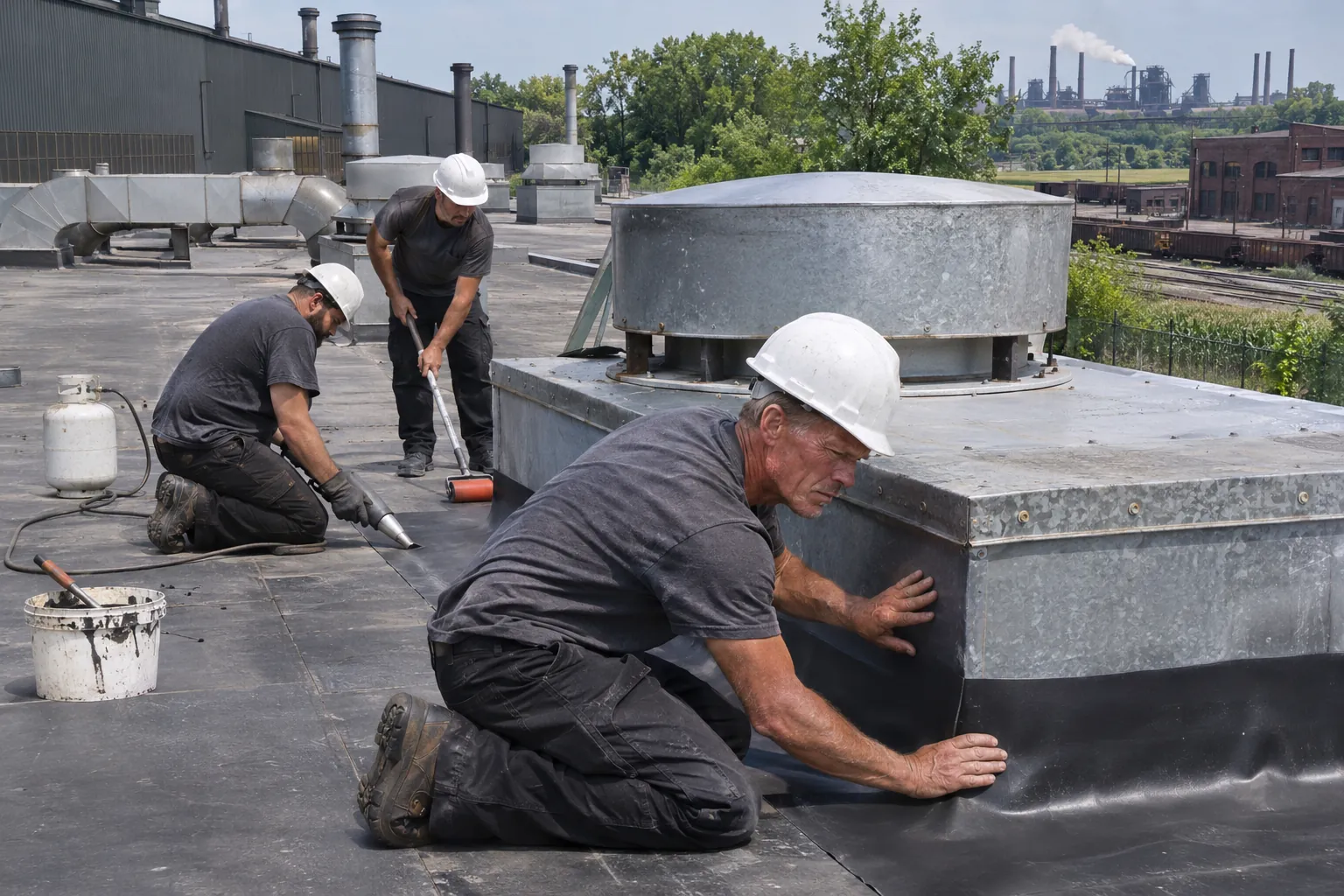
Plant roofs built around stacks, curbs, heat, and service traffic.
Industrial Roofing →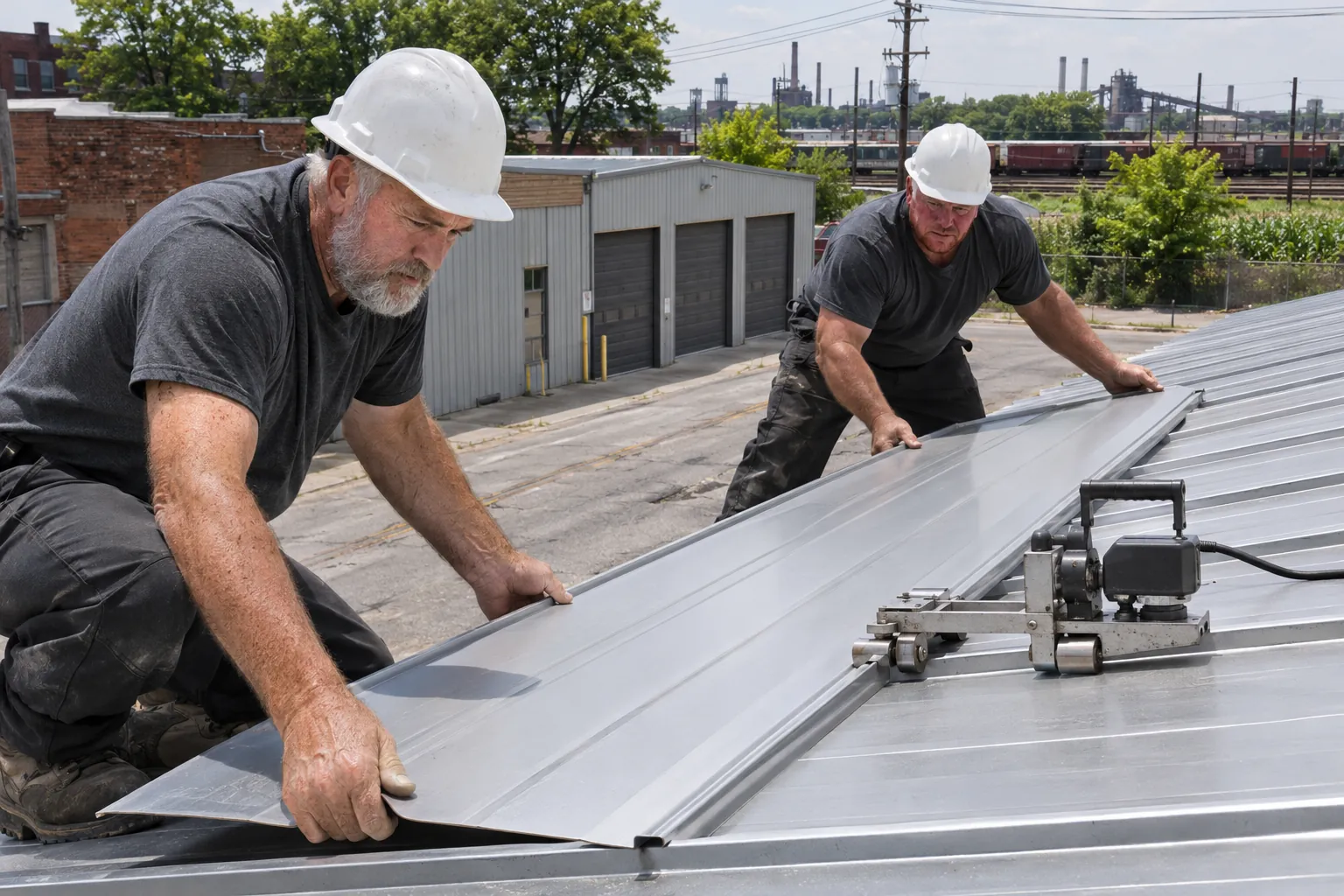
Steel panels for shops, storage buildings, and sloped retrofits.
Commercial Metal Roofing →Yes, over one existing roof with dry insulation and a firm deck. Core cuts or a moisture survey come first, since wet boards sealed under new membrane keep rotting. Several old roofs or a damaged deck mean tear-off.
Twenty to thirty years is the common range. Thicker 60- or 80-mil sheet, well-welded seams, full drainage, and yearly checks push it toward thirty. Ponding, heavy traffic, and skipped inspections pull it back.
Dropped tools and boots can puncture it, so service paths need pads. Membrane formulas differ between makers. Seams are only as good as the welding, which is why every weld is probed after it cools.
Warehouse roofs there run wide and flat, and TPO comes in wide rolls with welded seams, so a big field gets fewer laps. The white surface stays cooler in summer, and a damaged section patches cleanly.
Hail can crack aging seams, bruise the insulation under the sheet, and puncture thin membrane, and much of it hides from the ground. After a storm the roof is walked, soft spots are marked, and photos are taken in case an insurance claim follows.
A white surface reflects much of the sun a black roof absorbs, so air around rooftop units runs cooler on summer afternoons. Units still need their own maintenance, but they work against less heat rising off the membrane.
Send the address and roof size if you have it, and we will set up the core cuts.